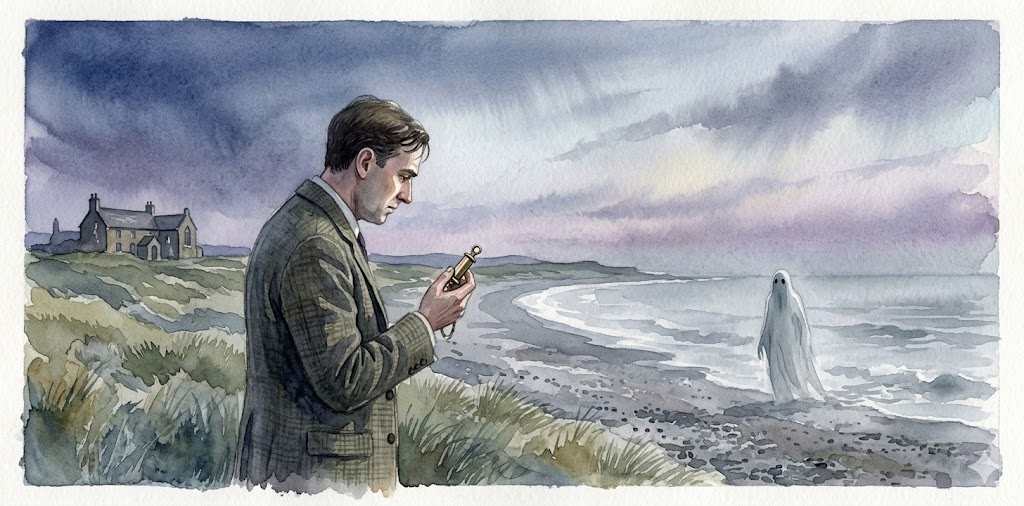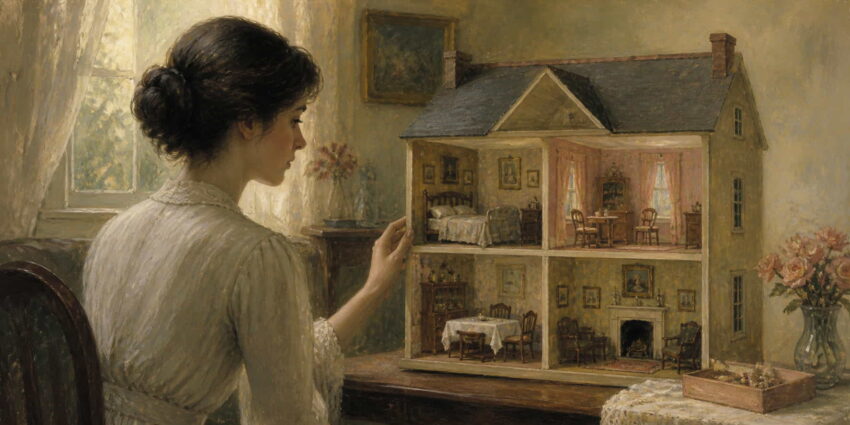
Xuất bản năm 1922, “The Doll’s House” của Katherine Mansfield là một trong những truyện ngắn tinh tế và ám ảnh nhất về bất bình đẳng giai cấp trong thế giới trẻ thơ—nơi một ngọn đèn nhỏ trở thành biểu tượng của lòng nhân ái vượt qua định kiến xã hội.
The Doll’s House / Ngôi Nhà Búp Bê by Katherine Mansfield
Part 1: The Doll’s House Arrives
Phần 1: Ngôi Nhà Búp Bê Đến
WHEN dear old Mrs. Hay went back to town after staying with the Burnells she sent the children a doll’s house.
KHI bà Hay già dấu yêu trở về thành phố sau khi lưu lại nhà nhà Burnells, bà gửi cho những đứa trẻ một ngôi nhà búp bê.
It was so big that the carter and Pat carried it into the courtyard, and there it stayed, propped up on two wooden boxes beside the feed-room door.
Nó to đến mức người đánh xe và Pat phải khiêng nó vào sân, và nó đứng ở đó, được chống đỡ trên hai cái hộp gỗ bên cạnh cửa kho thức ăn.
No harm could come to it; it was summer.
Không có gì có thể làm hỏng nó được; trời đang là mùa hè.
And perhaps the smell of paint would have gone off by the time it had to be taken in.
Và có lẽ mùi sơn sẽ bay đi vào lúc nó phải được mang vào trong nhà.
For, really, the smell of paint coming from that doll’s house (‘ Sweet of old Mrs. Hay, of course ; most sweet and generous ! ‘)—but the smell of paint was quite enough to make anyone seriously ill, in Aunt Beryl’s opinion.
Bởi vì, thật ra, mùi sơn từ ngôi nhà búp bê đó (‘Bà Hay già thật tốt bụng, dĩ nhiên rồi; thật tốt bụng và hào phóng!’)—nhưng mùi sơn cũng đủ để làm bất kỳ ai ốm nặng, theo ý kiến của Dì Beryl.
Even before the sacking was taken off.
Ngay cả trước khi lớp bao tải được gỡ ra.
And when it was…
Và khi nó được gỡ ra…
There stood the Doll’s house, a dark, oily, spinach green, picked out with bright yellow.
Ngôi nhà Búp Bê đứng đó, màu xanh rau cải tối tăm và bóng nhờn, điểm xuyết bằng màu vàng rực rỡ.
Its two solid little chimneys, glued on to the roof, were painted red and white, and the door, gleaming with yellow varnish, was like a little slab of toffee.
Hai ống khói nhỏ chắc chắn của nó, được dán lên mái nhà, được sơn đỏ trắng, và cánh cửa, sáng bóng với lớp sơn vàng, trông như một miếng kẹo toffee nhỏ.
Four windows, real windows, were divided into panes by a broad streak of green.
Bốn cửa sổ, cửa sổ thật sự, được chia thành các ô bởi một dải xanh rộng.
There was actually a tiny porch, too, painted yellow, with big lumps of congealed paint hanging along the edge.
Thực ra còn có một cái hiên nhỏ xíu nữa, được sơn vàng, với những cục sơn đông đặc lớn treo dọc theo mép.
But perfect, perfect little house! Who could possibly mind the smell.
Nhưng thật hoàn hảo, ngôi nhà nhỏ hoàn hảo! Ai có thể bận tâm đến mùi sơn chứ.
It was part of the joy, part of the newness.
Đó là một phần của niềm vui, một phần của sự mới mẻ.
” Open it quickly, someone ! “
“Mở ra đi, ai đó mở ra đi!”
The hook at the side was stuck fast.
Cái móc ở bên hông bị kẹt cứng.
Pat prized it open with his penknife, and the whole house front swung back, and—there you were, gazing at one and the same moment into the drawing-room and dining-room, the kitchen and two bedrooms.
Pat撬 mở nó bằng dao nhíp, và toàn bộ mặt trước của ngôi nhà đu ra, và—ngay đó, bạn đang nhìn cùng một lúc vào phòng khách và phòng ăn, nhà bếp và hai phòng ngủ.
That is the way for a house to open ! Why don’t all houses open like that ?
Đó mới là cách để một ngôi nhà mở ra! Tại sao không phải tất cả các ngôi nhà đều mở ra như vậy?
How much more exciting than peering through the slit of a door into a mean little hall with a hatstand and two umbrellas!
Thú vị hơn bao nhiêu so với việc nhìn qua khe cửa vào một cái hành lang nhỏ tệ hại với giá móc mũ và hai cái ô!
That is—isn’t it ?—what you long to know about a house when you put your hand on the knocker.
Đó là—phải không?—điều bạn khao khát biết về một ngôi nhà khi bạn đặt tay lên cái gõ cửa.
Perhaps it is the way God opens houses at the dead of night when He is taking a quiet turn with an angel…
Có lẽ đó là cách Chúa mở những ngôi nhà vào lúc nửa đêm tĩnh lặng khi Ngài đang dạo bước yên tĩnh cùng một thiên thần…
” O-oh! ” The Burnell children sounded as though they were in despair.
“Ô-ôi!” Những đứa trẻ nhà Burnell nghe có vẻ như đang tuyệt vọng.
It was too marvellous ; it was too much for them.
Nó quá tuyệt vời; nó quá sức chịu đựng của chúng.
They had never seen anything like it in their lives.
Chúng chưa bao giờ nhìn thấy thứ gì như vậy trong cuộc đời mình.
All the rooms were papered.
Tất cả các phòng đều được dán giấy tường.
There were pictures on the walls, painted on the paper, with gold frames complete.
Có tranh trên tường, được vẽ lên giấy, với khung vàng hoàn chỉnh.
Red carpet covered all the floors except the kitchen ; red plush chairs in the drawing-room, green in the dining-room; tables, beds with real bedclothes, a cradle, a stove, a dresser with tiny plates and one big jug.
Thảm đỏ phủ tất cả các sàn nhà trừ nhà bếp; ghế nhung đỏ trong phòng khách, ghế màu xanh trong phòng ăn; bàn, giường với chăn gối thật sự, nôi, bếp lò, tủ chén với những cái đĩa nhỏ xíu và một cái bình lớn.
But what Kezia liked more than anything, what she liked frightfully, was the lamp.
Nhưng điều Kezia thích hơn bất cứ thứ gì, điều cô bé thích ghê gớm, là cái đèn.
It stood in the middle of the dining-room table, an exquisite little amber lamp with a white globe.
Nó đứng ở giữa bàn ăn, một cái đèn hổ phách nhỏ tinh xảo với bóng đèn trắng.
It was even filled all ready for lighting, though, of course, you couldn’t light it.
Nó thậm chí đã được đổ đầy sẵn sàng để thắp sáng, mặc dù, tất nhiên, bạn không thể thắp nó lên.
But there was something inside that looked like oil and moved when you shook it.
Nhưng bên trong có thứ gì đó trông như dầu và di chuyển khi bạn lắc nó.
The father and mother dolls, who sprawled very stiff as though they had fainted in the drawing-room, and their two little children asleep upstairs, were really too big for the doll’s house.
Con búp bê bố và mẹ, nằm rất cứng đờ như thể họ đã ngất đi trong phòng khách, và hai đứa con nhỏ ngủ ở tầng trên, thực sự quá to so với ngôi nhà búp bê.
They didn’t look as though they belonged.
Chúng trông như thể không thuộc về nơi đó.
But the lamp was perfect.
Nhưng cái đèn thì hoàn hảo.
It seemed to smile at Kezia, to say, ” I live here.” The lamp was real.
Nó dường như mỉm cười với Kezia, như muốn nói, “Tôi sống ở đây.” Cái đèn là thật.
The Burnell children could hardly walk to school fast enough the next morning.
Những đứa trẻ nhà Burnell gần như không thể đi đến trường đủ nhanh vào sáng hôm sau.
They burned to tell everybody, to describe, to—well —to boast about their doll’s house before the school-bell rang.
Chúng nóng lòng muốn kể cho mọi người, muốn miêu tả, muốn—thôi thì—khoe về ngôi nhà búp bê của mình trước khi chuông trường reo.
” I’m to tell,” said Isabel, ” because I’m the eldest. And you two can join in after. But I’m to tell first.”
“Tôi sẽ kể,” Isabel nói, “vì tôi là chị cả. Và hai đứa có thể tham gia vào sau. Nhưng tôi sẽ kể trước.”
There was nothing to answer.
Không có gì để đáp lại.
Isabel was bossy, but she was always right, and Lottie and Kezia knew too well the powers that went with being eldest.
Isabel hay ra lệnh, nhưng cô bé luôn đúng, và Lottie và Kezia biết quá rõ những quyền lực đi kèm với việc là chị cả.
They brushed through the thick buttercups at the road edge and said nothing.
Chúng vạch qua những bông hoa mao lương dày đặc ở mép đường và không nói gì.
” And I’m to choose who’s to come and see it first. Mother said I might.”
“Và tôi sẽ chọn ai được đến xem trước. Mẹ nói tôi có thể làm vậy.”
For it had been arranged that while the doll’s house stood in the courtyard they might ask the girls at school, two at a time, to come and look.
Vì đã có sự sắp xếp rằng trong khi ngôi nhà búp bê đứng trong sân, họ có thể mời các bạn gái ở trường, hai người một lần, đến và xem.
Not to stay to tea, of course, or to come traipsing through the house.
Tất nhiên không phải để ở lại uống trà, hay đến lang thang qua nhà.
But just to stand quietly in the courtyard while Isabel pointed out the beauties, and Lottie and Kezia looked pleased…
Mà chỉ để đứng yên lặng trong sân trong khi Isabel chỉ ra những vẻ đẹp, và Lottie và Kezia trông có vẻ hài lòng…
But hurry as they might, by the time they had reached the tarred palings of the boys’ playground the bell had begun to jangle.
Nhưng dù có vội vã đến đâu, khi chúng đến được hàng rào hắc ín của sân chơi bọn trai thì chuông đã bắt đầu reo vang.
They only just had time to whip off their hats and fall into line before the roll was called.
Chúng chỉ vừa kịp giật mũ xuống và vào hàng trước khi điểm danh.
Never mind.
Không sao.
Isabel tried to make up for it by looking very important and mysterious and by whispering behind her hand to the girls near her, ” Got something to tell you at playtime.”
Isabel cố bù lại bằng cách trông thật quan trọng và bí ẩn và thì thầm sau bàn tay với các bạn gái gần mình, “Có chuyện kể cho tụi mày nghe lúc ra chơi.”
Playtime came and Isabel was surrounded.
Giờ ra chơi đến và Isabel bị vây quanh.
The girls of her class nearly fought to put their arms round her, to walk away with her, to beam flatteringly, to be her special friend.
Các bạn gái trong lớp gần như tranh nhau khoác tay qua người cô bé, đi dạo cùng cô bé, nở nụ cười tâng bốc, để trở thành người bạn đặc biệt của cô bé.
She held quite a court under the huge pine trees at the side of the playground.
Cô bé giữ một triều đình khá lớn dưới những cây thông khổng lồ ở bên sân chơi.
Nudging, giggling together, the little girls pressed up close.
Huých nhau, cười khúc khích cùng nhau, những cô bé nhỏ chen vào gần.
And the only two who stayed outside the ring were the two who were always outside, the little Kelveys.
Và chỉ có hai người ở ngoài vòng tròn là hai người luôn ở ngoài, hai chị em Kelvey nhỏ.
They knew better than to come anywhere near the Burnells.
Chúng biết không nên đến gần nhà Burnells.
For the fact was, the school the Burnell children went to was not at all the kind of place their parents would have chosen if there had been any choice.
Bởi vì thực tế là, ngôi trường mà những đứa trẻ nhà Burnell đến không phải là loại nơi mà bố mẹ chúng sẽ chọn nếu có lựa chọn nào khác.
But there was none.
Nhưng không có lựa chọn nào khác.
It was the only school for miles.
Đó là trường học duy nhất trong nhiều dặm.
And the consequence was all the children of the neighbourhood, the Judge’s little girls, the doctor’s daughters, the store-keeper’s children, the milkman’s, were forced to mix together.
Và hậu quả là tất cả trẻ em trong vùng, các cô con gái nhỏ của quan tòa, các con gái của bác sĩ, con cái của người chủ cửa hàng, của người giao sữa, đều bị buộc phải học chung với nhau.
Not to speak of there being an equal number of rude, rough little boys as well.
Chưa kể đến việc có một số lượng tương đương những cậu bé thô lỗ, thô kệch nữa.
But the line had to be drawn somewhere.
Nhưng ranh giới phải được vạch ra ở đâu đó.
It was drawn at the Kelveys.
Nó được vạch ra ở nhà Kelveys.
Many of the children, including the Burnells, were not allowed even to speak to them.
Nhiều đứa trẻ, kể cả nhà Burnells, thậm chí không được phép nói chuyện với chúng.
They walked past the Kelveys with their heads in the air, and as they set the fashion in all matters of behaviour, the Kelveys were shunned by everybody.
Chúng đi ngang qua nhà Kelveys với đầu ngẩng cao, và vì chúng dẫn đầu xu hướng trong mọi vấn đề về hành xử, nhà Kelveys bị tất cả mọi người xa lánh.
Even the teacher had a special voice for them, and a special smile for the other children when Lil Kelvey came up to her desk with a bunch of dreadfully common-looking flowers.
Ngay cả giáo viên cũng có giọng nói đặc biệt dành cho chúng, và nụ cười đặc biệt dành cho các trẻ khác khi Lil Kelvey đến bàn cô với một bó hoa trông tầm thường đến kinh khủng.
They were the daughters of a spry, hardworking little washerwoman, who went about from house to house by the day.
Chúng là con gái của một bà giặt đồ nhỏ bé lanh lợi và chăm chỉ, người đi từ nhà này sang nhà khác theo ngày.
This was awful enough.
Điều này đã đủ tệ rồi.
But where was Mr. Kelvey ? Nobody knew for certain.
Nhưng ông Kelvey ở đâu? Không ai biết chắc.
But everybody said he was in prison.
Nhưng ai cũng nói ông ấy ở trong tù.
So they were the daughters of a washerwoman and a gaolbird.
Vì vậy chúng là con gái của một bà giặt đồ và một tên tù.
Very nice company for other people’s children!
Thật là bạn bè tốt cho con cái người khác!
And they looked it.
Và chúng trông đúng như vậy.
Why Mrs. Kelvey made them so conspicuous was hard to understand.
Tại sao bà Kelvey lại làm chúng nổi bật đến vậy thì thật khó hiểu.
The truth was they were dressed in ” bits ” given to her by the people for whom she worked.
Sự thật là chúng được mặc những mảnh vải “vụn” được cho bởi những người mà bà làm việc cho.
Lil, for instance, who was a stout, plain child, with big freckles, came to school in a dress made from a green art-serge table-cloth of the Burnells’, with red plush sleeves from the Logans’ curtains.
Lil chẳng hạn, một đứa trẻ mập mạp, bình thường, với nhiều tàn nhang lớn, đến trường trong chiếc váy được may từ tấm khăn trải bàn vải serge nghệ thuật màu xanh của nhà Burnells’, với tay áo nhung đỏ từ rèm cửa nhà Logan.
Her hat, perched on top of her high forehead, was a grown-up woman’s hat, once the property of Miss Lecky, the postmistress.
Chiếc mũ của cô bé, đặt trên đỉnh trán cao của cô, là chiếc mũ của người phụ nữ trưởng thành, từng là tài sản của cô Lecky, bưu tá.
It was turned up at the back and trimmed with a large scarlet quill.
Nó được lật lên ở phía sau và trang trí bằng một chiếc lông vũ đỏ tươi lớn.
What a little guy she looked !
Trông cô bé thật ngộ nghĩnh!
It was impossible not to laugh.
Thật không thể không cười.
And her little sister, our Else, wore a long white dress, rather like a nightgown, and a pair of little boy’s boots.
Và em gái nhỏ của cô, cô bé Else của chúng ta, mặc một chiếc váy dài màu trắng, trông khá giống áo ngủ, và một đôi ủng nhỏ của con trai.
But whatever our Else wore she would have looked strange.
Nhưng dù cô bé Else mặc gì thì cô bé cũng sẽ trông kỳ lạ.
She was a tiny wishbone of a child, with cropped hair and enormous solemn eyes—a little white owl.
Cô bé là một đứa trẻ nhỏ như cái xương ức, với mái tóc cắt ngắn và đôi mắt to tròn nghiêm trang—một con cú trắng nhỏ.
Nobody had ever seen her smile ; she scarcely ever spoke.
Chưa ai từng thấy cô bé cười; cô bé gần như không bao giờ nói.
She went through life holding on to Lil, with a piece of Lil’s skirt screwed up in her hand.
Cô bé đi qua cuộc đời bám vào Lil, với một mảnh váy của Lil nắm chặt trong tay.
Where Lil went, our Else followed.
Lil đi đâu, cô bé Else của chúng ta theo đó.
In the playground, on the road going to and from school, there was Lil marching in front and our Else holding on behind.
Trong sân chơi, trên đường đến và về trường, có Lil đi phía trước và cô bé Else của chúng ta bám phía sau.
Only when she wanted anything, or when she was out of breath, our Else gave Lil a tug, a twitch, and Lil stopped and turned round.
Chỉ khi cô bé muốn gì đó, hoặc khi cô bé hết hơi, cô bé Else của chúng ta giật giật váy Lil, và Lil dừng lại và quay người lại.
The Kelveys never failed to understand each other.
Hai chị em Kelvey không bao giờ thất bại trong việc hiểu nhau.
Now they hovered at the edge ; you couldn’t stop them listening.
Bây giờ chúng lảng vảng ở rìa; bạn không thể ngăn chúng nghe.
When the little girls turned round and sneered, Lil, as usual, gave her silly, shamefaced smile, but our Else only looked.
Khi các cô bé quay lại và nhếch mép, Lil, như thường lệ, nở nụ cười ngớ ngẩn, xấu hổ, nhưng cô bé Else của chúng ta chỉ nhìn.
And Isabel’s voice, so very proud, went on telling.
Và giọng Isabel, thật tự hào, tiếp tục kể.
The carpet made a great sensation, but so did the beds with real bedclothes, and the stove with an oven door.
Tấm thảm gây xôn xao lớn, nhưng những chiếc giường với chăn gối thật sự, và bếp lò với cửa lò nướng cũng vậy.
When she finished Kezia broke in. ” You’ve forgotten the lamp, Isabel.”
Khi cô bé kể xong, Kezia ngắt lời. “Em quên cái đèn rồi, Isabel.”
” Oh, yes,” said Isabel, ” and there’s a teeny little lamp, all made of yellow glass, with a white globe that stands on the dining-room table. You couldn’t tell it from a real one.”
“Ồ, phải,” Isabel nói, “và có một cái đèn tí hon, làm hoàn toàn bằng thủy tinh vàng, với bóng đèn trắng đứng trên bàn ăn. Trông y như đèn thật.”
” The lamp’s best of all,” cried Kezia.
“Cái đèn đẹp nhất trong tất cả,” Kezia reo lên.
She thought Isabel wasn’t making half enough of the little lamp.
Cô bé nghĩ Isabel không nhấn mạnh đủ về cái đèn nhỏ.
But nobody paid any attention.
Nhưng không ai để ý.
Isabel was choosing the two who were to come back with them that afternoon and see it.
Isabel đang chọn hai người sẽ về cùng họ vào chiều hôm đó để xem.
She chose Emmie Cole and Lena Logan.
Cô bé chọn Emmie Cole và Lena Logan.
But when the others knew they were all to have a chance, they couldn’t be nice enough to Isabel.
Nhưng khi những người khác biết họ đều sẽ có cơ hội, họ không thể đủ tốt bụng với Isabel.
One by one they put their arms round Isabel’s waist and walked her off.
Từng người một khoác tay qua eo Isabel và dẫn cô bé đi.
They had something to whisper to her, a secret. ” Isabel’s my friend.”
Họ có gì đó thì thầm với cô bé, một bí mật. “Isabel là bạn của tôi.”
Only the little Kelveys moved away forgotten ; there was nothing more for them to hear.
Chỉ có hai chị em Kelvey nhỏ bước đi bị lãng quên; không còn gì cho chúng nghe nữa.
End of Part 1 — Stay tuned for the next episode! / Kết thúc Phần 1 — Hãy đón đọc phần tiếp theo!
Part 2: The Whisper and the Cruelty
Phần 2: Lời Thì Thầm và Sự Tàn Nhẫn
Days passed, and as more children saw the doll’s house, the fame of it spread.
Ngày qua ngày, khi ngày càng nhiều trẻ em được xem ngôi nhà búp bê, danh tiếng của nó lan rộng.
It became the one subject, the rage.
Nó trở thành chủ đề duy nhất, cơn sốt.
The one question was, ” Have you seen Burnells’ doll’s house ? Oh, ain’t it lovely ! ” ” Haven’t you seen it ? Oh, I say ! “
Câu hỏi duy nhất là, “Bạn đã xem ngôi nhà búp bê của nhà Burnells chưa? Ồ, nó đẹp không!” “Bạn chưa xem à? Ồ, tôi nói thật đó!”
Even the dinner hour was given up to talking about it.
Ngay cả giờ ăn trưa cũng dành hết để nói về nó.
The little girls sat under the pines eating their thick mutton sandwiches and big slabs of johnny cake spread with butter.
Những cô bé ngồi dưới những cây thông ăn những chiếc bánh sandwich thịt cừu dày và những miếng bánh johnny cake lớn phết bơ.
While always, as near as they could get, sat the Kelveys, our Else holding on to Lil, listening too, while they chewed their jam sandwiches out of a newspaper soaked with large red blobs.
Trong khi đó, luôn luôn ngồi gần nhất có thể, là hai chị em Kelveys, cô bé Else bám vào Lil, cũng lắng nghe, trong khi chúng nhai những chiếc bánh sandwich mứt từ tờ báo thấm những vết đỏ lớn.
” Mother,” said Kezia, ” can’t I ask the Kelveys just once ? “
“Mẹ ơi,” Kezia nói, “con không thể mời nhà Kelveys một lần thôi sao?”
” Certainly not, Kezia.”
“Chắc chắn là không, Kezia.”
” But why not ? “
“Nhưng tại sao không?”
” Run away, Kezia ; you know quite well why not.”
“Đi đi, Kezia; con biết rõ tại sao không rồi đó.”
At last everybody had seen it except them.
Cuối cùng tất cả mọi người đã được xem ngoại trừ chúng.
On that day the subject rather flagged.
Vào ngày đó chủ đề có phần lắng xuống.
It was the dinner hour.
Đó là giờ ăn trưa.
The children stood together under the pine trees, and suddenly, as they looked at the Kelveys eating out of their paper, always by themselves, always listening, they wanted to be horrid to them.
Những đứa trẻ đứng cùng nhau dưới những cây thông, và đột nhiên, khi nhìn nhà Kelveys ăn từ tờ báo của mình, luôn luôn một mình, luôn luôn lắng nghe, chúng muốn tàn nhẫn với họ.
Emmie Cole started the whisper.
Emmie Cole khởi xướng lời thì thầm.
” Lil Kelvey’s going to be a servant when she grows up.”
“Lil Kelvey sẽ làm người hầu khi lớn lên.”
” O-oh, how awful! ” said Isabel Burnell, and she made eyes at Emmie.
“Ô-ôi, thật kinh khủng!” Isabel Burnell nói, và cô bé ra mắt với Emmie.
Emmie swallowed in a very meaning way and nodded to Isabel as she’d seen her mother do on those occasions.
Emmie nuốt nước bọt một cách đầy ý nghĩa và gật đầu với Isabel như cô bé đã thấy mẹ mình làm trong những dịp đó.
” It’s true—it’s true—it’s true,” she said.
“Thật—thật—thật đấy,” cô bé nói.
Then Lena Logan’s little eyes snapped. ” Shall I ask her ? ” she whispered.
Rồi đôi mắt nhỏ của Lena Logan sáng lên. “Để tôi hỏi cô ta không?” cô bé thì thầm.
” Bet you don’t,” said Jessie May.
“Cược là mày không dám,” Jessie May nói.
” Pooh, I’m not frightened,” said Lena.
“Hứ, tao không sợ đâu,” Lena nói.
Suddenly she gave a little squeal and danced in front of the other girls. ” Watch! Watch me ! Watch me now! ” said Lena.
Đột nhiên cô bé kêu một tiếng nhỏ và nhảy múa trước các bạn gái khác. “Nhìn đây! Nhìn tao đây! Nhìn tao ngay bây giờ!” Lena nói.
And sliding, gliding, dragging one foot, giggling behind her hand, Lena went over to the Kelveys.
Và trượt, lướt, kéo lê một chân, cười khúc khích sau bàn tay, Lena đi về phía nhà Kelveys.
Lil looked up from her dinner.
Lil ngước nhìn từ bữa ăn của mình.
She wrapped the rest quickly away.
Cô bé vội vàng gói phần còn lại đi.
Our Else stopped chewing.
Cô bé Else của chúng ta ngừng nhai.
What was coming now ?
Chuyện gì sắp xảy ra bây giờ?
” Is it true you’re going to be a servant when you grow up, Lil Kelvey ? ” shrilled Lena.
“Có thật không là mày sẽ làm người hầu khi lớn lên, Lil Kelvey?” Lena the thé hỏi.
Dead silence.
Im lặng chết chóc.
But instead of answering, Lil only gave her silly, shamefaced smile.
Nhưng thay vì trả lời, Lil chỉ nở nụ cười ngớ ngẩn, xấu hổ.
She didn’t seem to mind the question at all.
Cô bé dường như không bận tâm chút nào với câu hỏi đó.
What a sell for Lena !
Thật là thất bại cho Lena!
The girls began to titter.
Các cô bé bắt đầu cười khúc khích.
Lena couldn’t stand that.
Lena không thể chịu đựng điều đó.
She put her hands on her hips; she shot forward. ” Yah, yer father’s in prison ! ” she hissed, spitefully.
Cô bé chống tay vào hông; cô bé lao về phía trước. “Ha, bố mày ở trong tù đó!” cô bé thì thào ác ý.
This was such a marvellous thing to have said that the little girls rushed away in a body, deeply, deeply excited, wild with joy.
Đây là điều tuyệt vời đến mức những cô bé ùa đi cùng nhau, phấn khích sâu sắc, điên cuồng vui mừng.
Someone found a long rope, and they began skipping.
Ai đó tìm được một sợi dây dài, và chúng bắt đầu nhảy dây.
And never did they skip so high, run in and out so fast, or do such daring things as on that morning.
Và chưa bao giờ chúng nhảy cao đến vậy, chạy vào ra nhanh đến vậy, hay làm những chuyện táo bạo như vào buổi sáng hôm đó.
End of Part 2 — Stay tuned for the next episode! / Kết thúc Phần 2 — Hãy đón đọc phần tiếp theo!
Final Part: “I Seen the Little Lamp”
Phần Cuối: “Con Đã Thấy Cái Đèn Nhỏ”
In the afternoon Pat called for the Burnell children with the buggy and they drove home.
Vào buổi chiều Pat đến đón những đứa trẻ nhà Burnell bằng xe ngựa và họ lái về nhà.
There were visitors.
Có khách đến chơi.
Isabel and Lottie, who liked visitors, went upstairs to change their pinafores.
Isabel và Lottie, những đứa thích khách, đi lên lầu thay tạp dề.
But Kezia thieved out at the back.
Nhưng Kezia lén ra phía sau.
Nobody was about; she began to swing on the big white gates of the courtyard.
Không có ai xung quanh; cô bé bắt đầu đu trên cánh cổng trắng lớn của sân.
Presently, looking along the road, she saw two little dots.
Chẳng mấy chốc, nhìn dọc theo con đường, cô bé nhìn thấy hai chấm nhỏ.
They grew bigger, they were coming towards her.
Chúng ngày càng lớn hơn, chúng đang tiến về phía cô bé.
Now she could see that one was in front and one close behind.
Bây giờ cô bé có thể thấy rằng một người đi trước và một người bám sát phía sau.
Now she could see that they were the Kelveys.
Bây giờ cô bé có thể thấy đó là hai chị em Kelveys.
Kezia stopped swinging.
Kezia ngừng đu.
She slipped off the gate as if she was going to run away.
Cô bé trượt xuống khỏi cổng như thể định bỏ chạy.
Then she hesitated.
Rồi cô bé do dự.
The Kelveys came nearer, and beside them walked their shadows, very long, stretching right across the road with their heads in the buttercups.
Hai chị em Kelveys đến gần hơn, và bên cạnh chúng là những cái bóng của chúng, rất dài, trải dài qua con đường với đầu nằm trong những bông hoa mao lương.
Kezia clambered back on the gate ; she had made up her mind ; she swung out.
Kezia trèo lại lên cổng; cô bé đã quyết định; cô bé đu ra ngoài.
” Hullo,” she said to the passing Kelveys.
“Xin chào,” cô bé nói với hai chị em Kelveys đang đi qua.
They were so astounded that they stopped.
Chúng ngạc nhiên đến mức dừng lại.
Lil gave her silly smile.
Lil nở nụ cười ngớ ngẩn của mình.
Our Else stared.
Cô bé Else của chúng ta nhìn chằm chằm.
” You can come and see our doll’s house if you want to,” said Kezia, and she dragged one toe on the ground.
“Các bạn có thể đến xem ngôi nhà búp bê của tụi mình nếu muốn,” Kezia nói, và cô bé kéo lê một ngón chân trên mặt đất.
But at that Lil turned red and shook her head quickly.
Nhưng khi đó Lil đỏ mặt và lắc đầu nhanh chóng.
” Why not ? ” asked Kezia.
“Tại sao không?” Kezia hỏi.
Lil gasped, then she said, ” Your ma told our ma you wasn’t to speak to us.”
Lil há hốc miệng, rồi cô bé nói, “Mẹ bạn đã nói với mẹ tụi mình là bạn không được nói chuyện với tụi mình.”
” Oh, well,” said Kezia. She didn’t know what to reply. ” It doesn’t matter. You can come and see our doll’s house all the same. Come on. Nobody’s looking.”
“Ồ, thôi,” Kezia nói. Cô bé không biết phải đáp lại gì. “Không sao đâu. Các bạn vẫn có thể đến xem ngôi nhà búp bê của tụi mình. Đến đây nào. Không ai nhìn đâu.”
But Lil shook her head still harder.
Nhưng Lil lắc đầu còn mạnh hơn nữa.
” Don’t you want to ? ” asked Kezia.
“Các bạn không muốn sao?” Kezia hỏi.
Suddenly there was a twitch, a tug at Lil’s skirt.
Đột nhiên có một cái giật, một cú kéo ở váy Lil.
She turned round.
Cô bé quay người lại.
Our Else was looking at her with big, imploring eyes ; she was frowning ; she wanted to go.
Cô bé Else của chúng ta đang nhìn cô bé với đôi mắt to tròn van xin; cô bé đang cau mày; cô bé muốn đi.
For a moment Lil looked at our Else very doubtfully.
Trong một khoảnh khắc Lil nhìn cô bé Else của chúng ta một cách rất nghi ngờ.
But then our Else twitched her skirt again.
Nhưng rồi cô bé Else của chúng ta lại giật váy cô bé.
She started forward.
Cô bé bước tới.
Kezia led the way.
Kezia dẫn đường.
Like two little stray cats they followed across the courtyard to where the doll’s house stood.
Như hai con mèo hoang nhỏ, chúng theo qua sân đến chỗ ngôi nhà búp bê đứng.
” There it is,” said Kezia.
“Đó rồi,” Kezia nói.
There was a pause.
Có một khoảng lặng.
Lil breathed loudly, almost snorted ; our Else was still as stone.
Lil thở to, gần như khịt mũi; cô bé Else của chúng ta đứng im như tượng đá.
” I’ll open it for you,” said Kezia kindly.
“Mình sẽ mở ra cho các bạn,” Kezia nói thân thiện.
She undid the hook and they looked inside.
Cô bé tháo móc ra và chúng nhìn vào bên trong.
” There’s the drawing-room and the dining-room, and that’s the——”
“Đây là phòng khách và phòng ăn, và đó là——”
” Kezia ! “
“Kezia!”
Oh, what a start they gave !
Ôi, chúng giật mình đến thế nào!
“Kezia!”
“Kezia!”
It was Aunt Beryl’s voice.
Đó là giọng của Dì Beryl.
They turned round.
Chúng quay lại.
At the back door stood Aunt Beryl, staring as if she couldn’t believe what she saw.
Ở cửa sau đứng Dì Beryl, nhìn chằm chằm như thể bà không thể tin vào những gì bà thấy.
” How dare you ask the little Kelveys into the courtyard ? ” said her cold, furious voice. ” You know as well as I do, you’re not allowed to talk to them. Run away, children, run away at once. And don’t come back again,” said Aunt Beryl. And she stepped into the yard and shooed them out as if they were chickens.
“Mày dám mời những đứa Kelvey vào sân à?” giọng lạnh lùng, giận dữ của bà nói. “Mày biết rõ như tao vậy, mày không được phép nói chuyện với chúng. Đi ngay đi, các con, đi ngay lập tức. Và đừng quay lại nữa,” Dì Beryl nói. Và bà bước vào sân và xua chúng ra như thể chúng là những con gà.
” Off you go immediately! ” she called, cold and proud.
“Đi ngay đi!” bà gọi với, lạnh lùng và kiêu ngạo.
They did not need telling twice.
Chúng không cần phải được nhắc hai lần.
Burning with shame, shrinking together, Lil huddling along like her mother, our Else dazed, somehow they crossed the big courtyard and squeezed through the white gate.
Bừng bừng xấu hổ, co rúm lại bên nhau, Lil đi lom khom như mẹ của mình, cô bé Else của chúng ta choáng váng, bằng cách nào đó chúng băng qua sân lớn và chui qua cổng trắng.
” Wicked, disobedient little girl! ” said Aunt Beryl bitterly to Kezia, and she slammed the doll’s house to.
“Đứa bé hư đốn, không nghe lời!” Dì Beryl nói cay đắng với Kezia, và bà đóng sầm ngôi nhà búp bê lại.
The afternoon had been awful.
Buổi chiều hôm đó thật kinh khủng.
A letter had come from Willie Brent, a terrifying, threatening letter, saying if she did not meet him that evening in Pulman’s Bush, he’d come to the front door and ask the reason why!
Một bức thư đã đến từ Willie Brent, một bức thư đáng sợ, đe dọa, nói rằng nếu bà không gặp ông ta vào buổi tối hôm đó ở Pulman’s Bush, ông ta sẽ đến cửa trước và hỏi lý do tại sao!
But now that she had frightened those little rats of Kelveys and given Kezia a good scolding, her heart felt lighter.
Nhưng bây giờ khi bà đã làm những con chuột nhỏ Kelveys kia sợ và cho Kezia một bài quở trách tốt, lòng bà cảm thấy nhẹ nhàng hơn.
That ghastly pressure was gone.
Cái áp lực ghê gớm đó đã biến mất.
She went back to the house humming.
Bà trở vào nhà với tiếng ngân nga.
When the Kelveys were well out of sight of Burnells’, they sat down to rest on a big red drainpipe by the side of the road.
Khi hai chị em Kelveys đã khuất tầm nhìn của nhà Burnells, chúng ngồi xuống nghỉ ngơi trên một cái ống thoát nước đỏ lớn bên lề đường.
Lil’s cheeks were still burning ; she took off the hat with the quill and held it on her knee.
Má Lil vẫn còn đỏ bừng; cô bé tháo chiếc mũ có lông vũ và cầm trên đầu gối.
Dreamily they looked over the hay paddocks, past the creek, to the group of wattles where Logan’s cows stood waiting to be milked.
Mơ màng chúng nhìn qua những thửa đồng cỏ khô, qua con suối, đến nhóm cây keo nơi những con bò của nhà Logan đứng chờ được vắt sữa.
What were their thoughts?
Suy nghĩ của chúng là gì?
Presently our Else nudged up close to her sister.
Chẳng mấy chốc cô bé Else của chúng ta dúi sát vào người chị.
But now she had forgotten the cross lady.
Nhưng bây giờ cô bé đã quên mất người phụ nữ cáu kỉnh kia.
She put out a finger and stroked her sister’s quill; she smiled her rare smile.
Cô bé đưa một ngón tay ra và vuốt chiếc lông vũ của chị; cô bé mỉm nụ cười hiếm hoi của mình.
” I seen the little lamp,” she said, softly.
“Con đã thấy cái đèn nhỏ,” cô bé nói, khẽ khàng.
Then both were silent once more.
Rồi cả hai lại im lặng.
The End / Kết Thúc
Special Topic: The Lamp at the Edge of the World
Bình Luận: Ngọn Đèn Ở Rìa Thế Giới
“The Doll’s House” is one of Katherine Mansfield’s most perfectly constructed stories — a tale so compact and so devastating that its final four words have stayed in the memory of readers for over a century.
“Ngôi Nhà Búp Bê” là một trong những truyện ngắn được xây dựng hoàn hảo nhất của Katherine Mansfield — một câu chuyện cô đọng và tàn khốc đến mức bốn từ cuối cùng của nó đã ở lại trong ký ức của độc giả hơn một thế kỷ.
“I seen the little lamp.”
“Con đã thấy cái đèn nhỏ.”
These words — spoken by our Else, the silent child who almost never speaks — are the emotional climax of the entire story, and one of the most quietly radical sentences in twentieth-century fiction.
Những lời này — được nói bởi cô bé Else của chúng ta, đứa trẻ im lặng gần như không bao giờ nói — là đỉnh điểm cảm xúc của toàn bộ câu chuyện, và là một trong những câu văn lặng lẽ mang tính cấp tiến nhất trong văn học thế kỷ hai mươi.
To understand why, we have to understand what the lamp means — and what it means that our Else is the one who sees it.
Để hiểu tại sao, chúng ta phải hiểu ý nghĩa của cái đèn — và ý nghĩa của việc chính cô bé Else là người nhìn thấy nó.
From the moment Kezia first sees the doll’s house, she is drawn not to its carpets, its plush chairs, its tiny plates — but to the lamp.
Từ khoảnh khắc Kezia lần đầu nhìn thấy ngôi nhà búp bê, cô bé không bị thu hút bởi những tấm thảm, những chiếc ghế nhung, những cái đĩa nhỏ xíu — mà bởi cái đèn.
The lamp is described as something almost alive: it “seemed to smile at Kezia, to say, ‘I live here.'”
Cái đèn được miêu tả như thứ gì đó gần như sống động: nó “dường như mỉm cười với Kezia, như muốn nói, ‘Tôi sống ở đây.'”
Among all the perfect, prettily appointed rooms of the doll’s house — rooms that represent the aspirational world of middle-class comfort — the lamp alone is declared “real.”
Trong tất cả những căn phòng hoàn hảo, được trang bị xinh xắn của ngôi nhà búp bê — những căn phòng đại diện cho thế giới khao khát của sự thoải mái tầng lớp trung lưu — chỉ có cái đèn được tuyên bố là “thật.”
Mansfield is telling us something important here: the lamp represents warmth, light, and genuine presence — the things that matter in a home, as opposed to the things that merely signal status.
Mansfield đang nói với chúng ta điều gì đó quan trọng ở đây: cái đèn đại diện cho hơi ấm, ánh sáng và sự hiện diện chân thực — những thứ quan trọng trong một ngôi nhà, trái ngược với những thứ chỉ đơn thuần biểu thị địa vị.
The story’s social world is arranged entirely around status.
Thế giới xã hội của câu chuyện được sắp xếp hoàn toàn xung quanh địa vị.
The Burnells are respectable; the Kelveys are not.
Nhà Burnells đáng kính trọng; nhà Kelveys thì không.
The Burnell children can see the doll’s house; the Kelvey children cannot.
Những đứa trẻ nhà Burnell có thể xem ngôi nhà búp bê; những đứa trẻ nhà Kelvey thì không.
This exclusion is not just a matter of class cruelty — it is presented as the natural order of things, enforced by mothers, teachers, and children alike, so deeply internalized that even Lil, when first invited, turns red and shakes her head.
Sự loại trừ này không chỉ là vấn đề của sự tàn nhẫn giai cấp — nó được trình bày như trật tự tự nhiên của mọi thứ, được thực thi bởi những người mẹ, giáo viên và trẻ em như nhau, được nội tâm hóa sâu sắc đến mức ngay cả Lil, khi lần đầu được mời, cũng đỏ mặt và lắc đầu.
She has been taught that she does not belong — and she has believed it.
Cô bé đã được dạy rằng cô bé không thuộc về nơi đó — và cô bé đã tin vào điều đó.
It is our Else — the silent one, the one who barely exists in the social world of the story — who pulls Lil forward.
Chính cô bé Else của chúng ta — người im lặng, người gần như không tồn tại trong thế giới xã hội của câu chuyện — là người kéo Lil bước tới.
And it is our Else who, when all the shame and shouting is over, remembers only one thing: the lamp.
Và chính cô bé Else, khi tất cả nỗi xấu hổ và tiếng quát tháo đã qua, chỉ nhớ một thứ: cái đèn.
Not the carpet. Not the plush chairs. Not the spectacle of the house itself — but the small, warm, real thing at its center.
Không phải tấm thảm. Không phải những chiếc ghế nhung. Không phải cái cảnh tượng của bản thân ngôi nhà — mà là thứ nhỏ bé, ấm áp, thật sự ở trung tâm của nó.
Mansfield gives us two characters who are capable of seeing what is real: Kezia, who insists on the lamp against the indifference of her sisters and classmates; and our Else, who carries the memory of it away with her even from a visit that ends in humiliation.
Mansfield cho chúng ta thấy hai nhân vật có khả năng nhìn thấy điều thật sự: Kezia, người khăng khăng về cái đèn bất chấp sự thờ ơ của chị và các bạn học; và cô bé Else của chúng ta, người mang theo ký ức về nó ngay cả từ chuyến thăm kết thúc trong sự nhục nhã.
What connects them is not class — Kezia is a Burnell, our Else is a Kelvey — but a kind of innocent clarity of perception that the social world has not yet managed to corrupt in them.
Điều kết nối họ không phải là giai cấp — Kezia là nhà Burnell, cô bé Else là nhà Kelvey — mà là một loại sự nhận thức trong sáng vô tư mà thế giới xã hội chưa kịp làm tha hóa trong họ.
The story ends not with resolution or justice — the Kelveys are still expelled from the courtyard, Aunt Beryl still hums her way back inside, the social order is entirely undisturbed — but with a moment of grace so small and so private that the world barely notices it.
Câu chuyện kết thúc không phải bằng sự giải quyết hay công lý — hai chị em Kelveys vẫn bị đuổi ra khỏi sân, Dì Beryl vẫn ngân nga trở vào trong nhà, trật tự xã hội hoàn toàn không bị xáo trộn — mà bằng một khoảnh khắc ân sủng nhỏ bé và riêng tư đến mức thế giới hầu như không nhận ra nó.
Our Else saw the lamp.
Cô bé Else của chúng ta đã thấy cái đèn.
For one brief moment, she was inside the warmth.
Trong một khoảnh khắc ngắn ngủi, cô bé đã ở bên trong hơi ấm đó.
And nothing — not Aunt Beryl’s fury, not the shame of the expulsion, not a lifetime of being told she does not belong — can take that away from her.
Và không có gì — không phải cơn thịnh nộ của Dì Beryl, không phải nỗi xấu hổ của việc bị đuổi đi, không phải cả cuộc đời bị nói rằng cô bé không thuộc về nơi đó — có thể lấy điều đó đi khỏi cô bé.
The End / Kết Thúc
Mastering “The Doll’s House”
Explore class distinction, social exclusion, and the symbol of the lamp.
1. What does the doll’s house primarily symbolize in the story?
2. Why is Kezia so captivated by the “little lamp” inside the house?
3. How does the school environment reinforce the class distinctions found in the village?
4. What is the significance of the Kelvey children’s clothing?
5. Why does Aunt Beryl react so violently when she sees Kezia showing the house to the Kelveys?
6. Contrast Kezia’s character with her sister Isabel. What is the main difference?
7. What does the “shooing” of the Kelveys like “chickens” imply about the adults’ view of them?
8. What is the “Deep Learning” takeaway from Else Kelvey’s final line: “I seen the little lamp”?
9. Why did the narrator mention that the doll’s house had a “foul” smell of paint?
10. What role does “silence” play in the characterization of Lil and Else Kelvey?