Được viết vào khoảng năm 1893, truyện ngắn này của Stephen Crane không chỉ là câu chuyện cảm động về tình bạn giữa một đứa trẻ và chú chó nhỏ. Ẩn sau những câu chữ giản dị là một bức tranh ngụ ngôn tàn khốc về xã hội miền Nam nước Mỹ thời hậu chiến, nơi sự trung thành và nhẫn nhịn đôi khi không thể chống lại được sự tàn nhẫn vô cớ của hệ thống quyền lực.
A Dark Brown Dog / Con Chó Nâu Sẫm by Stephen Crane
Part 1: The Meeting on the Street
Phần 1: Cuộc Gặp Gỡ Trên Đường Phố
A Child was standing on a street-corner. He leaned with one shoulder against a high board-fence and swayed the other to and fro, the while kicking carelessly at the gravel.
Một Đứa Trẻ đang đứng ở góc đường phố. Cậu tựa một vai vào hàng rào gỗ cao và đung đưa vai kia qua lại, trong khi đá lung tung vào những viên sỏi.
Sunshine beat upon the cobbles, and a lazy summer wind raised yellow dust which trailed in clouds down the avenue. Clattering trucks moved with indistinctness through it. The child stood dreamily gazing.
Nắng đập xuống những viên đá lát đường, và một làn gió mùa hè lười biếng cuốn lên bụi vàng trôi thành đám mây dọc theo đại lộ. Những chiếc xe tải lộc cộc di chuyển mờ nhạt qua đó. Đứa trẻ đứng mơ màng nhìn.
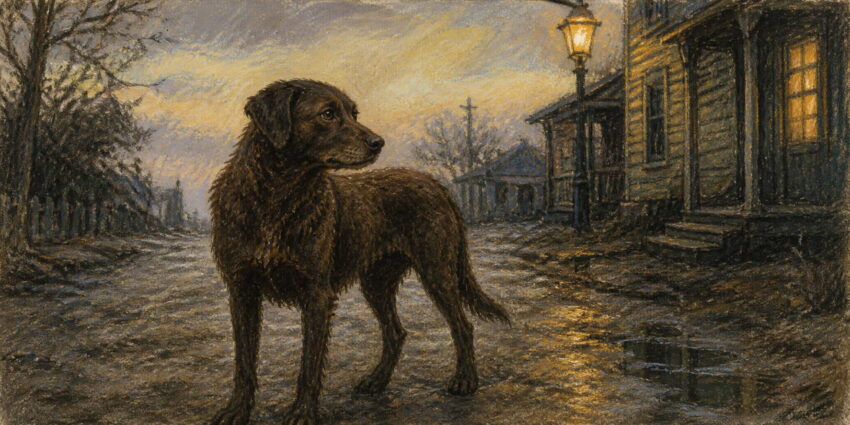
After a time, a little dark-brown dog came trotting with an intent air down the sidewalk. A short rope was dragging from his neck. Occasionally he trod upon the end of it and stumbled.
Sau một lúc, một con chó nhỏ màu nâu sẫm đến chạy trot với vẻ chú tâm dọc theo vỉa hè. Một sợi dây thừng ngắn lê lết từ cổ nó. Đôi khi nó dẫm phải đầu sợi dây và vấp ngã.
He stopped opposite the child, and the two regarded each other. The dog hesitated for a moment, but presently he made some little advances with his tail. The child put out his hand and called him.
Nó dừng lại đối diện với đứa trẻ, và cả hai nhìn nhau. Con chó do dự một lúc, nhưng chẳng mấy chốc nó vẫy đuôi tiến lại một chút. Đứa trẻ đưa tay ra và gọi nó.
In an apologetic manner the dog came close, and the two had an interchange of friendly pattings and waggles. The dog became more enthusiastic with each moment of the interview, until with his gleeful caperings he threatened to overturn the child. Whereupon the child lifted his hand and struck the dog a blow upon the head.
Với vẻ xin lỗi, con chó tiến đến gần, và cả hai có một cuộc trao đổi những cái vỗ ve thân thiện và những cú vẫy đuôi. Con chó ngày càng hào hứng theo từng khoảnh khắc của cuộc gặp gỡ, cho đến khi với những bước nhảy vui vẻ nó suýt làm đứa trẻ ngã. Vì vậy đứa trẻ giơ tay lên và đánh con chó một cái vào đầu.
This thing seemed to overpower and astonish the little dark-brown dog, and wounded him to the heart. He sank down in despair at the child’s feet. When the blow was repeated, together with an admonition in childish sentences, he turned over upon his back, and held his paws in a peculiar manner. At the same time with his ears and his eyes he offered a small prayer to the child.
Điều này dường như áp đảo và làm kinh ngạc con chó nhỏ nâu sẫm, và làm tổn thương nó đến tận trái tim. Nó sụp xuống tuyệt vọng dưới chân đứa trẻ. Khi cái đánh được lặp lại, cùng với những lời khuyên bảo bằng những câu trẻ con, nó lăn ra nằm ngửa, và giữ hai chân trước theo cách kỳ lạ. Đồng thời bằng đôi tai và đôi mắt nó dâng lên một lời cầu nguyện nhỏ với đứa trẻ.
He looked so comical on his back, and holding his paws peculiarly, that the child was greatly amused and gave him little taps repeatedly, to keep him so. But the little dark-brown dog took this chastisement in the most serious way, and no doubt considered that he had committed some grave crime, for he wriggled contritely and showed his repentance in every way that was in his power.
Nó trông hài hước đến vậy khi nằm ngửa, giữ hai chân theo kiểu kỳ lạ đó, đến mức đứa trẻ rất thích thú và liên tục nhẹ nhàng đánh vào nó để giữ tư thế đó. Nhưng con chó nhỏ nâu sẫm nhận lấy hình phạt này theo cách nghiêm túc nhất, và chắc chắn nghĩ rằng nó đã phạm một tội lỗi nghiêm trọng nào đó, vì nó vặn vẹo đầy hối hận và tỏ sự ăn năn theo mọi cách có thể.
He pleaded with the child and petitioned him, and offered more prayers.
Nó van xin đứa trẻ và cầu khẩn, và dâng thêm những lời cầu nguyện.
At last the child grew weary of this amusement and turned toward home. The dog was praying at the time. He lay on his back and turned his eyes upon the retreating form.
Cuối cùng đứa trẻ chán trò vui này và quay về nhà. Con chó đang cầu nguyện lúc đó. Nó nằm ngửa và dõi mắt nhìn theo bóng hình đang bước đi.
Presently he struggled to his feet and started after the child. The latter wandered in a perfunctory way toward his home, stopping at times to investigate various matters. During one of these pauses he discovered the little dark-brown dog who was following him with the air of a footpad.
Chẳng mấy chốc nó vật lộn đứng dậy và bắt đầu đi theo đứa trẻ. Đứa trẻ lang thang một cách qua loa về phía nhà, thỉnh thoảng dừng lại để xem xét các thứ. Trong một lần dừng như vậy cậu phát hiện ra con chó nhỏ nâu sẫm đang theo sau mình với dáng vẻ của kẻ trộm vặt.
The child beat his pursuer with a small stick he had found. The dog lay down and prayed until the child had finished, and resumed his journey. Then he scrambled erect and took up the pursuit again.
Đứa trẻ đánh kẻ đang đuổi theo mình bằng một cây gậy nhỏ tìm được. Con chó nằm xuống và cầu nguyện cho đến khi đứa trẻ đánh xong, rồi tiếp tục hành trình của mình. Rồi nó vật vã đứng thẳng dậy và tiếp tục đuổi theo.
On the way to his home the child turned many times and beat the dog, proclaiming with childish gestures that he held him in contempt as an unimportant dog, with no value save for a moment. For being this quality of animal the dog apologized and eloquently expressed regret, but he continued stealthily to follow the child. His manner grew so very guilty that he slunk like an assassin.
Trên đường về nhà đứa trẻ quay lại nhiều lần và đánh con chó, tuyên bố bằng những cử chỉ trẻ con rằng nó khinh thường con chó như một con chó tầm thường, không có giá trị ngoại trừ trong một khoảnh khắc. Vì là loại vật như vậy con chó xin lỗi và hùng hồn bày tỏ sự hối tiếc, nhưng nó vẫn lén lút tiếp tục đi theo đứa trẻ. Thái độ của nó trở nên tội lỗi đến mức nó lẻn đi như một kẻ sát nhân.
When the child reached his door-step, the dog was industriously ambling a few yards in the rear. He became so agitated with shame when he again confronted the child that he forgot the dragging rope. He tripped upon it and fell forward.
Khi đứa trẻ đến bậc cửa nhà, con chó đang cần mẫn bước chậm cách vài thước phía sau. Nó trở nên xáo trộn vì xấu hổ đến mức khi lại đối mặt với đứa trẻ nó quên mất sợi dây đang lê. Nó vấp phải nó và ngã chúi về phía trước.
The child sat down on the step and the two had another interview. During it the dog greatly exerted himself to please the child. He performed a few gambols with such abandon that the child suddenly saw him to be a valuable thing. He made a swift, avaricious charge and seized the rope.
Đứa trẻ ngồi xuống bậc thềm và cả hai có một cuộc gặp gỡ khác. Trong đó con chó rất nỗ lực để làm hài lòng đứa trẻ. Nó thực hiện vài bước nhảy múa với sự buông thả đến mức đứa trẻ đột nhiên thấy nó là thứ có giá trị. Cậu lao tới nhanh, tham lam và tóm lấy sợi dây.
He dragged his captive into a hall and up many long stairways in a dark tenement. The dog made willing efforts, but he could not hobble very skillfully up the stairs because he was very small and soft, and at last the pace of the engrossed child grew so energetic that the dog became panic-stricken.
Cậu kéo con vật bị bắt vào một hành lang và lên nhiều cầu thang dài trong một khu nhà trọ tối tăm. Con chó nỗ lực tự nguyện, nhưng nó không thể khập khiễng lên cầu thang một cách khéo léo vì nó rất nhỏ và mềm mại, và cuối cùng nhịp độ của đứa trẻ đang say sưa trở nên mạnh mẽ đến mức con chó hoảng loạn.
In his mind he was being dragged toward a grim unknown. His eyes grew wild with the terror of it. He began to wiggle his head frantically and to brace his legs.
Trong tâm trí nó đang bị kéo về phía một điều gì đó u ám chưa biết. Mắt nó trở nên hoang dại vì nỗi kinh hoàng. Nó bắt đầu lắc đầu điên loạn và chống chân lại.
The child redoubled his exertions. They had a battle on the stairs. The child was victorious because he was completely absorbed in his purpose, and because the dog was very small. He dragged his acquirement to the door of his home, and finally with triumph across the threshold.
Đứa trẻ tăng gấp đôi nỗ lực. Họ có một cuộc chiến trên cầu thang. Đứa trẻ thắng vì hoàn toàn chìm đắm vào mục đích, và vì con chó rất nhỏ. Cậu kéo con vật vừa chiếm được đến cửa nhà, và cuối cùng với chiến thắng qua ngưỡng cửa.
End of Episode 1 — Stay tuned for the next episode! / Kết thúc Episode 1 — Hãy đón đọc episode tiếp theo!
Part 2: A New Home
Phần 2: Một Ngôi Nhà Mới
No one was in. The child sat down on the floor and made overtures to the dog. These the dog instantly accepted. He beamed with affection upon his new friend. In a short time they were firm and abiding comrades.
Không có ai ở nhà. Đứa trẻ ngồi xuống sàn và chủ động làm hòa với con chó. Con chó lập tức chấp nhận. Nó tỏa sáng với tình cảm dành cho người bạn mới. Chẳng bao lâu họ đã là những người bạn thân thiết và lâu dài.
When the child’s family appeared, they made a great row. The dog was examined and commented upon and called names. Scorn was leveled at him from all eyes, so that he became much embarrassed and drooped like a scorched plant.
Khi gia đình đứa trẻ xuất hiện, họ gây ầm ĩ lớn. Con chó bị kiểm tra và bình phẩm và chửi rủa. Sự khinh thường được nhắm vào nó từ khắp mọi ánh mắt, đến mức nó trở nên rất bẽ bàng và rũ xuống như một cây bị bỏng.
But the child went sturdily to the center of the floor, and, at the top of his voice, championed the dog. It happened that he was roaring protestations, with his arms clasped about the dog’s neck, when the father of the family came in from work.
Nhưng đứa trẻ dũng cảm bước ra giữa sàn nhà, và hết sức to tiếng bênh vực con chó. Tình cờ cậu đang gào lên phản đối, với hai tay ôm chặt cổ con chó, khi người cha của gia đình trở về từ công việc.
The parent demanded to know what the blazes they were making the kid howl for. It was explained in many words that the infernal kid wanted to introduce a disreputable dog into the family.
Người cha đòi biết tại sao quái gì lại làm thằng bé gào lên như vậy. Người ta giải thích bằng nhiều lời rằng thằng bé chết tiệt muốn đưa một con chó tai tiếng vào gia đình.
A family council was held. On this depended the dog’s fate, but he in no way heeded, being busily engaged in chewing the end of the child’s dress.
Một hội đồng gia đình được triệu tập. Số phận của con chó phụ thuộc vào đây, nhưng nó không hề quan tâm, đang bận rộn nhai đầu váy áo của đứa trẻ.
The affair was quickly ended. The father of the family, it appears, was in a particularly savage temper that evening, and when he perceived that it would amaze and anger everybody if such a dog were allowed to remain, he decided that it should be so.
Sự việc được giải quyết nhanh chóng. Người cha của gia đình, có vẻ như, đang trong cơn thịnh nộ đặc biệt dữ dội tối hôm đó, và khi ông nhận thấy rằng sẽ làm mọi người kinh ngạc và tức giận nếu con chó như vậy được ở lại, ông quyết định là cứ để vậy.
The child, crying softly, took his friend off to a retired part of the room to hobnob with him, while the father quelled a fierce rebellion of his wife. So it came to pass that the dog was a member of the household.
Đứa trẻ, khóc thút thít, dắt người bạn vào góc khuất của phòng để tâm sự với nó, trong khi người cha dập tắt sự phản đối dữ dội của vợ. Vậy là con chó trở thành thành viên của hộ gia đình.
He and the child were associated together at all times save when the child slept. The child became a guardian and a friend. If the large folk kicked the dog and threw things at him, the child made loud and violent objections.
Nó và đứa trẻ luôn ở cùng nhau ngoại trừ khi đứa trẻ ngủ. Đứa trẻ trở thành người bảo hộ và người bạn. Nếu những người lớn đá con chó và ném đồ vào nó, đứa trẻ phản đối to và kịch liệt.
Once when the child had run, protesting loudly, with tears raining down his face and his arms outstretched, to protect his friend, he had been struck in the head with a very large saucepan from the hand of his father, enraged at some seeming lack of courtesy in the dog.
Một lần khi đứa trẻ chạy đến, phản đối to tiếng, với nước mắt tuôn rơi trên mặt và hai tay dang rộng, để bảo vệ bạn mình, cậu đã bị đánh vào đầu bằng chiếc nồi rất lớn từ tay người cha, tức giận vì sự thiếu lịch sự rõ ràng nào đó của con chó.
Ever after, the family were careful how they threw things at the dog. Moreover, the latter grew very skilful in avoiding missiles and feet. In a small room containing a stove, a table, a bureau and some chairs, he would display strategic ability of a high order, dodging, feinting and scuttling about among the furniture.
Từ đó về sau, gia đình cẩn thận hơn về cách ném đồ vào con chó. Hơn nữa, con chó trở nên rất khéo léo trong việc tránh đạn ném và những cú đá. Trong một căn phòng nhỏ chứa bếp, bàn, tủ ngăn kéo và một số ghế, nó sẽ thể hiện khả năng chiến lược bậc cao, tránh né, đánh lừa và lẩn trốn quanh đồ đạc.
He could force three or four people armed with brooms, sticks and handfuls of coal, to use all their ingenuity to get in a blow. And even when they did, it was seldom that they could do him a serious injury or leave any imprint.
Nó có thể buộc ba hoặc bốn người vũ trang bằng chổi, gậy và nắm than, phải dùng hết sự khéo léo để đánh được một cú. Và ngay cả khi họ đánh được, hiếm khi họ gây ra chấn thương nghiêm trọng hay để lại dấu vết nào.
But when the child was present, these scenes did not occur. It came to be recognized that if the dog was molested, the child would burst into sobs, and as the child, when started, was very riotous and practically unquenchable, the dog had therein a safeguard.
Nhưng khi đứa trẻ có mặt, những cảnh này không xảy ra. Người ta nhận ra rằng nếu con chó bị làm phiền, đứa trẻ sẽ bật khóc, và vì đứa trẻ, khi đã bắt đầu, rất ồn ào và hầu như không thể dập tắt, con chó có ở đó một biện pháp bảo vệ.
However, the child could not always be near. At night, when he was asleep, his dark-brown friend would raise from some black corner a wild, wailful cry, a song of infinite lowliness and despair, that would go shuddering and sobbing among the buildings of the block and cause people to swear.
Tuy nhiên, đứa trẻ không phải lúc nào cũng ở gần. Vào ban đêm, khi cậu ngủ, người bạn nâu sẫm sẽ cất lên từ một góc tối nào đó tiếng kêu hoang dại, than vãn, một bài ca của sự thấp hèn và tuyệt vọng vô tận, sẽ rùng rùng và thút thít qua các tòa nhà trong khu phố và khiến mọi người chửi rủa.
At these times the singer would often be chased all over the kitchen and hit with a great variety of articles.
Vào những lúc đó ca sĩ thường bị đuổi khắp bếp và bị đánh bằng đủ loại đồ vật.
End of Episode 2 — Stay tuned for the next episode! / Kết thúc Episode 2 — Hãy đón đọc episode tiếp theo!
Part 3: The Kingdom of Two
Phần 3: Vương Quốc Của Hai Người
Sometimes, too, the child himself used to beat the dog, although it is not known that he ever had what could be truly called a just cause. The dog always accepted these thrashings with an air of admitted guilt.
Đôi khi, đứa trẻ cũng tự mình đánh con chó, mặc dù không rõ liệu cậu có bao giờ có lý do thực sự xứng đáng gọi là chính đáng không. Con chó luôn chấp nhận những trận đòn này với vẻ nhận tội.
He was too much of a dog to try to look to be a martyr or to plot revenge. He received the blows with deep humility, and furthermore he forgave his friend the moment the child had finished, and was ready to caress the child’s hand with his little red tongue.
Nó quá biết thân phận của một con chó để cố tỏ ra như người tử vì đạo hay âm mưu trả thù. Nó nhận những cú đánh với sự khiêm nhường sâu sắc, hơn nữa nó tha thứ cho người bạn ngay khoảnh khắc đứa trẻ đánh xong, và sẵn sàng vuốt ve tay đứa trẻ bằng chiếc lưỡi đỏ nhỏ.
When misfortune came upon the child, and his troubles overwhelmed him, he would often crawl under the table and lay his small distressed head on the dog’s back. The dog was ever sympathetic.
Khi bất hạnh ập đến với đứa trẻ, và những rắc rối nhấn chìm cậu, cậu thường bò xuống dưới bàn và đặt cái đầu nhỏ đau khổ lên lưng con chó. Con chó luôn đồng cảm.
It is not to be supposed that at such times he took occasion to refer to the unjust beatings his friend, when provoked, had administered to him.
Không thể nghĩ rằng vào những lúc đó nó nhân cơ hội đề cập đến những trận đòn bất công mà người bạn, khi bị khiêu khích, đã giáng xuống nó.
He did not achieve any notable degree of intimacy with the other members of the family. He had no confidence in them, and the fear that he would express at their casual approach often exasperated them exceedingly.
Nó không đạt được mức độ thân thiết đáng kể nào với những thành viên khác của gia đình. Nó không tin tưởng họ, và nỗi sợ hãi mà nó bày tỏ trước sự tiếp cận thông thường của họ thường làm họ rất bực bội.
They used to gain a certain satisfaction in underfeeding him, but finally his friend the child grew to watch the matter with some care, and when he forgot it, the dog was often successful in secret for himself.
Họ thường đạt được sự thỏa mãn nào đó khi cho nó ăn thiếu, nhưng cuối cùng người bạn đứa trẻ lớn lên biết theo dõi chuyện đó cẩn thận, và khi cậu quên thì con chó thường tự tìm kiếm cho mình trong bí mật.
So the dog prospered. He developed a large bark, which came wondrously from such a small rug of a dog. He ceased to howl persistently at night.
Vậy là con chó phát triển. Nó phát triển tiếng sủa to, phát ra kỳ diệu từ một con chó nhỏ như tấm thảm như vậy. Nó ngừng hú dai dẳng vào ban đêm.
Sometimes, indeed, in his sleep, he would utter little yells, as from pain, but that occurred, no doubt, when in his dreams he encountered huge flaming dogs who threatened him direfully.
Đôi khi, thực ra trong giấc ngủ, nó sẽ phát ra những tiếng kêu nhỏ, như từ cơn đau, nhưng điều đó xảy ra, chắc chắn, khi trong giấc mơ nó gặp phải những con chó khổng lồ rực lửa đe dọa nó một cách kinh khủng.
His devotion to the child grew until it was a sublime thing. He wagged at his approach; he sank down in despair at his departure. He could detect the sound of the child’s step among all the noises of the neighborhood. It was like a calling voice to him.
Sự tận tụy của nó với đứa trẻ lớn lên cho đến khi trở thành điều cao cả. Nó vẫy đuôi khi cậu đến gần; nó sụp xuống tuyệt vọng khi cậu rời đi. Nó có thể phân biệt âm thanh bước chân đứa trẻ giữa tất cả tiếng ồn của khu phố. Đó như tiếng gọi với nó.
The scene of their companionship was a kingdom governed by this terrible potentate, the child; but neither criticism nor rebellion ever lived for an instant in the heart of the one subject. Down in the mystic, hidden fields of his little dog-soul bloomed flowers of love and fidelity and perfect faith.
Khung cảnh của tình bạn họ là một vương quốc được cai trị bởi bạo chúa đáng sợ này, đứa trẻ; nhưng không có sự chỉ trích hay nổi loạn nào sống dù chỉ một khoảnh khắc trong lòng người thần dân duy nhất. Sâu trong những cánh đồng huyền bí, ẩn khuất của linh hồn chó nhỏ nở những bông hoa của tình yêu, sự trung thành và đức tin hoàn hảo.
The child was in the habit of going on many expeditions to observe strange things in the vicinity. On these occasions his friend usually jogged aimfully along behind. Perhaps, though, he went ahead. This necessitated his turning around every quarter-minute to make sure the child was coming.
Đứa trẻ có thói quen thực hiện nhiều chuyến thám hiểm để quan sát những thứ lạ lẫm trong vùng lân cận. Trong những dịp này người bạn thường chạy theo phía sau một cách có mục đích. Tuy nhiên, đôi khi nó đi trước. Điều này khiến nó phải quay đầu lại cứ mỗi phần tư phút để chắc chắn đứa trẻ đang đến.
He was filled with a large idea of the importance of these journeys. He would carry himself with such an air! He was proud to be the retainer of so great a monarch.
Nó tràn đầy ý thức lớn lao về tầm quan trọng của những chuyến đi này. Nó sẽ mang mình với thái độ như vậy! Nó tự hào được là người hầu cận của một vị quân vương vĩ đại như vậy.
End of Episode 3 — Stay tuned for the next episode! / Kết thúc Episode 3 — Hãy đón đọc episode tiếp theo!
Final Part: The Window
Part Cuối: Cửa Sổ
One day, however, the father of the family got quite exceptionally drunk. He came home and held carnival with the cooking utensils, the furniture and his wife. He was in the midst of this recreation when the child, followed by the dark-brown dog, entered the room. They were returning from their voyages.
Một ngày nọ, tuy nhiên, người cha của gia đình say rượu đặc biệt nghiêm trọng. Ông về nhà và tổ chức hội hè với các dụng cụ nấu nướng, đồ đạc và vợ ông. Ông đang giữa trò vui này khi đứa trẻ, theo sau là con chó nâu sẫm, bước vào phòng. Họ đang trở về từ những cuộc thám hiểm.
The child’s practised eye instantly noted his father’s state. He dived under the table, where experience had taught him was a rather safe place.
Con mắt thành thục của đứa trẻ ngay lập tức nhận ra trạng thái của cha. Cậu lặn xuống dưới bàn, nơi kinh nghiệm đã dạy cậu là chỗ khá an toàn.
The dog, lacking skill in such matters, was, of course, unaware of the true condition of affairs. He looked with interested eyes at his friend’s sudden dive. He interpreted it to mean: Joyous gambol. He started to patter across the floor to join him. He was the picture of a little dark-brown dog en route to a friend.
Con chó, thiếu kỹ năng trong những chuyện như vậy, tất nhiên không hay biết về tình trạng thực sự. Nó nhìn với đôi mắt tò mò vào cú lặn đột ngột của bạn. Nó hiểu điều đó có nghĩa là: Trò chơi vui vẻ. Nó bắt đầu chạy lúp xúp qua sàn để nhập cuộc. Nó là hình ảnh của một con chó nhỏ nâu sẫm đang trên đường đến với người bạn.
The head of the family saw him at this moment. He gave a huge howl of joy, and knocked the dog down with a heavy coffee-pot. The dog, yelling in supreme astonishment and fear, writhed to his feet and ran for cover. The man kicked out with a ponderous foot. It caused the dog to swerve as if caught in a tide.
Chủ gia đình nhìn thấy nó vào lúc này. Ông hú lên một tiếng vui mừng to lớn, và đánh ngã con chó bằng chiếc ấm cà phê nặng. Con chó, kêu rú trong sự kinh ngạc và sợ hãi tột cùng, vật lộn đứng dậy và chạy tìm nơi trú ẩn. Người đàn ông đá ra với bàn chân nặng nề. Nó khiến con chó chệch hướng như bị cuốn vào dòng chảy.
A second blow of the coffee-pot laid him upon the floor.
Cú đánh thứ hai của chiếc ấm cà phê quật ngã nó xuống sàn.
Here the child, uttering loud cries, came valiantly forth like a knight. The father of the family paid no attention to these calls of the child, but advanced with glee upon the dog.
Lúc này đứa trẻ, kêu to, dũng cảm bước ra như một hiệp sĩ. Người cha của gia đình không chú ý đến những tiếng gọi của đứa trẻ, mà vui vẻ tiến về phía con chó.
Upon being knocked down twice in swift succession, the latter apparently gave up all hope of escape. He rolled over on his back and held his paws in a peculiar manner. At the same time with his eyes and his ears he offered up a small prayer.
Sau khi bị quật ngã hai lần liên tiếp nhanh chóng, con vật rõ ràng từ bỏ mọi hy vọng thoát thân. Nó lăn ra nằm ngửa và giữ hai chân theo cách kỳ lạ. Đồng thời bằng đôi mắt và đôi tai nó dâng lên một lời cầu nguyện nhỏ.
But the father was in a mood for having fun, and it occurred to him that it would be a fine thing to throw the dog out of the window. So he reached down and grabbing the animal by a leg, lifted him, squirming, up. He swung him two or three times hilariously about his head, and then flung him with great accuracy through the window.
Nhưng người cha đang trong tâm trạng muốn vui vẻ, và ông nảy ra ý kiến rằng sẽ thật tuyệt khi ném con chó ra ngoài cửa sổ. Vì vậy ông cúi xuống và nắm lấy con vật từ một chân, nhấc nó lên, đang quằn quại. Ông vung nó hai ba lần một cách hào hứng quanh đầu, rồi ném nó với độ chính xác cao qua cửa sổ.
The soaring dog created a surprise in the block. A woman watering plants in an opposite window gave an involuntary shout and dropped a flower-pot. A man in another window leaned perilously out to watch the flight of the dog. A woman, who had been hanging out clothes in a yard, began to caper wildly. Her mouth was filled with clothes-pins, but her arms gave vent to a sort of exclamation. In appearance she was like a gagged prisoner. Children ran whooping.
Con chó bay vút tạo ra sự ngạc nhiên trong khu phố. Một người phụ nữ đang tưới cây ở cửa sổ đối diện kêu lên không tự chủ và đánh rơi chậu hoa. Một người đàn ông ở cửa sổ khác nghiêng người nguy hiểm ra ngoài để xem con chó bay. Một người phụ nữ đang phơi quần áo ở sân bắt đầu nhảy nhót điên loạn. Miệng bà đầy kẹp quần áo, nhưng hai tay bà phát ra một loại tiếng kêu. Trông bà như một tù nhân bị bịt miệng. Những đứa trẻ chạy reo hò.
The dark-brown body crashed in a heap on the roof of a shed five stories below. From thence it rolled to the pavement of an alleyway.
Thân hình nâu sẫm đập xuống thành một đống trên mái của một cái lán năm tầng bên dưới. Từ đó nó lăn xuống vỉa hè của một con hẻm.
The child in the room far above burst into a long, dirgelike cry, and toddled hastily out of the room. It took him a long time to reach the alley, because his size compelled him to go downstairs backward, one step at a time, and holding with both hands to the step above.
Đứa trẻ trong phòng trên cao phát ra tiếng khóc dài, như bài ai ca, và vội vã chập chững ra khỏi phòng. Cậu mất nhiều thời gian để đến được con hẻm, vì vóc người buộc cậu phải đi xuống cầu thang lùi, từng bước một, và hai tay bám vào bậc thang phía trên.
When they came for him later, they found him seated by the body of his dark-brown friend.
Khi họ đến tìm cậu sau đó, họ thấy cậu đang ngồi bên cạnh thi thể của người bạn nâu sẫm.
The End / Kết Thúc
Special Topic: Crane’s Allegory of the Reconstruction South
Bình Luận: Ngụ Ngôn của Crane về Miền Nam Thời Tái Thiết
“A Dark Brown Dog” (written c. 1893, published 1901) is one of Stephen Crane’s most powerful and disturbing works — a short story that reads on its surface as a tale about a child and his dog, but which functions as a carefully constructed allegory about the condition of emancipated Black Americans in the Jim Crow South during Reconstruction.
“Con Chó Nâu Sẫm” (viết khoảng năm 1893, xuất bản năm 1901) là một trong những tác phẩm mạnh mẽ và đáng lo ngại nhất của Stephen Crane — một truyện ngắn đọc bề ngoài như câu chuyện về đứa trẻ và con chó, nhưng hoạt động như một ngụ ngôn được xây dựng cẩn thận về tình trạng của những người Mỹ gốc Phi được giải phóng ở miền Nam thời Jim Crow trong thời kỳ Tái Thiết.
The allegory is consistent throughout: the dark-brown dog — defined from the first moment by the rope around his neck, a symbol of recent enslavement — represents the emancipated slave, free in name but still entangled in the structures of dependency and subjugation.
Ngụ ngôn nhất quán xuyên suốt: con chó nâu sẫm — được xác định ngay từ khoảnh khắc đầu tiên bởi sợi dây quanh cổ, biểu tượng của sự nô lệ gần đây — đại diện cho người nô lệ được giải phóng, tự do về danh nghĩa nhưng vẫn bị vướng vào cấu trúc phụ thuộc và khuất phục.
The child represents the white Southerner — not malicious by nature, capable of genuine affection, but conditioned by his environment to treat the dog with casual cruelty without understanding why, or even noticing that he is doing it.
Đứa trẻ đại diện cho người miền Nam da trắng — không ác ý về bản chất, có khả năng tình cảm chân thực, nhưng được điều kiện hóa bởi môi trường để đối xử với con chó bằng sự tàn nhẫn bình thường mà không hiểu tại sao, hay thậm chí không nhận ra mình đang làm vậy.
The dog’s extraordinary patience — his immediate forgiveness of every beating, his continued devotion despite abuse, his deep inability to understand the cruelty as cruelty — is not sentimentalized by Crane. It is portrayed as a form of psychological conditioning, the internalized submission of a being who has learned that survival depends on endurance and appeasement.
Sự kiên nhẫn phi thường của con chó — sự tha thứ ngay lập tức sau mỗi trận đòn, sự tận tụy tiếp tục dù bị ngược đãi, sự không thể hiểu sự tàn nhẫn như là sự tàn nhẫn — không được Crane lãng mạn hóa. Nó được mô tả như một hình thức điều kiện hóa tâm lý, sự phục tùng nội tâm của một sinh vật đã học được rằng sự sinh tồn phụ thuộc vào sức chịu đựng và xoa dịu.
The family unit — the abusive father, the complicit mother, the hostile relatives — represents the broader social structure of the Jim Crow South: an environment in which even the dog’s one protector, the child, is himself subject to violence from above, and is powerless to prevent the ultimate catastrophe.
Đơn vị gia đình — người cha bạo hành, người mẹ đồng lõa, những người thân thù địch — đại diện cho cấu trúc xã hội rộng lớn hơn của miền Nam Jim Crow: một môi trường trong đó ngay cả người bảo hộ duy nhất của con chó, đứa trẻ, cũng chịu bạo lực từ phía trên, và bất lực trước thảm họa cuối cùng.
The story’s most devastating irony is in the manner of the dog’s death: he is killed not in a fit of rage that has been building for years, but on a whim — because the drunken father “thought it would be a fine thing.” The violence is entirely gratuitous, entirely casual, and this is precisely Crane’s point: that the terror of the Jim Crow system was not exceptional. It was ordinary.
Sự mỉa mai tàn khốc nhất của câu chuyện nằm ở cách con chó chết: nó bị giết không phải trong cơn thịnh nộ đã tích tụ nhiều năm, mà trong một phút thích thú — vì người cha say rượu “nghĩ rằng sẽ thật tuyệt.” Bạo lực hoàn toàn vô cớ, hoàn toàn bình thường, và đây chính là điểm Crane muốn nói: rằng nỗi kinh hoàng của hệ thống Jim Crow không phải là ngoại lệ. Nó là bình thường.
The story’s final image — the child sitting beside the body of his dead friend in the alley — carries the full weight of historical grief. The child’s descent down the stairs, backward, one step at a time, is one of the most heartbreaking passages Crane ever wrote: the slow, helpless approach of someone too small to move faster, too devoted to stay away.
Hình ảnh cuối cùng của câu chuyện — đứa trẻ ngồi bên thi thể người bạn đã chết trong con hẻm — mang toàn bộ sức nặng của nỗi đau lịch sử. Cảnh đứa trẻ đi xuống cầu thang, lùi, từng bước một, là một trong những đoạn xé lòng nhất Crane từng viết: sự tiếp cận chậm chạp, bất lực của người quá nhỏ để di chuyển nhanh hơn, quá tận tụy để ở lại phía sau.
For Vietnamese readers, the story speaks to a universal experience of structural violence — the way that systems of power can make ordinary cruelty invisible to those who practice it, and can make even those who love across the dividing line unable to prevent the harm that the system demands.
Đối với độc giả Việt Nam, câu chuyện nói đến trải nghiệm phổ quát về bạo lực có hệ thống — cách mà các hệ thống quyền lực có thể làm cho sự tàn nhẫn bình thường trở nên vô hình đối với những người thực hiện nó, và có thể làm ngay cả những người yêu thương qua ranh giới phân chia cũng không thể ngăn chặn sự tổn hại mà hệ thống đòi hỏi.
The End / Kết Thúc
A Child was standing on a street-corner. He leaned with one shoulder against a high board-fence and swayed the other to and fro, the while kicking carelessly at the gravel.
Sunshine beat upon the cobbles, and a lazy summer wind raised yellow dust which trailed in clouds down the avenue. Clattering trucks moved with indistinctness through it. The child stood dreamily gazing.
After a time, a little dark-brown dog came trotting with an intent air down the sidewalk. A short rope was dragging from his neck. Occasionally he trod upon the end of it and stumbled.
He stopped opposite the child, and the two regarded each other. The dog hesitated for a moment, but presently he made some little advances with his tail. The child put out his hand and called him. In an apologetic manner the dog came close, and the two had an interchange of friendly pattings and waggles. The dog became more enthusiastic with each moment of the interview, until with his gleeful caperings he threatened to overturn the child. Whereupon the child lifted his hand and struck the dog a blow upon the head.
This thing seemed to overpower and astonish the little dark-brown dog, and wounded him to the heart. He sank down in despair at the child’s feet. When the blow was repeated, together with an admonition in childish sentences, he turned over upon his back, and held his paws in a peculiar manner. At the same time with his ears and his eyes he offered a small prayer to the child.
Presently he struggled to his feet and started after the child.
He looked so comical on his back, and holding his paws peculiarly, that the child was greatly amused and gave him little taps repeatedly, to keep him so. But the little dark-brown dog took this chastisement in the most serious way, and no doubt considered that he had committed some grave crime, for he wriggled contritely and showed his repentance in every way that was in his power. He pleaded with the child and petitioned him, and offered more prayers.
At last the child grew weary of this amusement and turned toward home. The dog was praying at the time. He lay on his back and turned his eyes upon the retreating form.
Presently he struggled to his feet and started after the child. The latter wandered in a perfunctory way toward his home, stopping at times to investigate various matters. During one of these pauses he discovered the little dark-brown dog who was following him with the air of a footpad.
The child beat his pursuer with a small stick he had found. The dog lay down and prayed until the child had finished, and resumed his journey. Then he scrambled erect and took up the pursuit again.
On the way to his home the child turned many times and beat the dog, proclaiming with childish gestures that he held him in contempt as an unimportant dog, with no value save for a moment. For being this quality of animal the dog apologized and eloquently expressed regret, but he continued stealthily to follow the child. His manner grew so very guilty that he slunk like an assassin.
When the child reached his door-step, the dog was industriously ambling a few yards in the rear. He became so agitated with shame when he again confronted the child that he forgot the dragging rope. He tripped upon it and fell forward.
The child attempts to drag the dark brown dog
The child sat down on the step and the two had another interview. During it the dog greatly exerted himself to please the child. He performed a few gambols with such abandon that the child suddenly saw him to be a valuable thing. He made a swift, avaricious charge and seized the rope.
He dragged his captive into a hall and up many long stairways in a dark tenement. The dog made willing efforts, but he could not hobble very skillfully up the stairs because he was very small and soft, and at last the pace of the engrossed child grew so energetic that the dog became panic-stricken. In his mind he was being dragged toward a grim unknown. His eyes grew wild with the terror of it. He began to wiggle his head frantically and to brace his legs.
The child redoubled his exertions. They had a battle on the stairs. The child was victorious because he was completely absorbed in his purpose, and because the dog was very small. He dragged his acquirement to the door of his home, and finally with triumph across the threshold.
Presently he struggled to his feet and started after the child.
No one was in. The child sat down on the floor and made overtures to the dog. These the dog instantly accepted. He beamed with affection upon his new friend. In a short time they were firm and abiding comrades.
When the child’s family appeared, they made a great row. The dog was examined and commented upon and called names. Scorn was leveled at him from all eyes, so that he became much embarrassed and drooped like a scorched plant. But the child went sturdily to the center of the floor, and, at the top of his voice, championed the dog. It happened that he was roaring protestations, with his arms clasped about the dog’s neck, when the father of the family came in from work.
The parent demanded to know what the blazes they were making the kid howl for. It was explained in many words that the infernal kid wanted to introduce a disreputable dog into the family.
A family council was held. On this depended the dog’s fate, but he in no way heeded, being busily engaged in chewing the end of the child’s dress.
The affair was quickly ended. The father of the family, it appears, was in a particularly savage temper that evening, and when he perceived that it would amaze and anger everybody if such a dog were allowed to remain, he decided that it should be so. The child, crying softly, took his friend off to a retired part of the room to hobnob with him, while the father quelled a fierce rebellion of his wife. So it came to pass that the dog was a member of the household.
He and the child were associated together at all times save when the child slept. The child became a guardian and a friend. If the large folk kicked the dog and threw things at him, the child made loud and violent objections. Once when the child had run, protesting loudly, with tears raining down his face and his arms outstretched, to protect his friend, he had been struck in the head with a very large saucepan from the hand of his father, enraged at some seeming lack of courtesy in the dog. Ever after, the family were careful how they threw things at the dog. Moreover, the latter grew very skilful in avoiding missiles and feet. In a small room containing a stove, a table, a bureau and some chairs, he would display strategic ability of a high order, dodging, feinting and scuttling about among the furniture. He could force three or four people armed with brooms, sticks and handfuls of coal, to use all their ingenuity to get in a blow. And even when they did, it was seldom that they could do him a serious injury or leave any imprint.
But when the child was present, these scenes did not occur. It came to be recognized that if the dog was molested, the child would burst into sobs, and as the child, when started, was very riotous and practically unquenchable, the dog had therein a safeguard.
However, the child could not always be near. At night, when he was asleep, his dark-brown friend would raise from some black corner a wild, wailful cry, a song of infinite lowliness and despair, that would go shuddering and sobbing among the buildings of the block and cause people to swear. At these times the singer would often be chased all over the kitchen and hit with a great variety of articles.
Sometimes, too, the child himself used to beat the dog, although it is not known that he ever had what could be truly called a just cause. The dog always accepted these thrashings with an air of admitted guilt. He was too much of a dog to try to look to be a martyr or to plot revenge. He received the blows with deep humility, and furthermore he forgave his friend the moment the child had finished, and was ready to caress the child’s hand with his little red tongue.
When misfortune came upon the child, and his troubles overwhelmed him, he would often crawl under the table and lay his small distressed head on the dog’s back. The dog was ever sympathetic. It is not to be supposed that at such times he took occasion to refer to the unjust beatings his friend, when provoked, had administered to him.
He did not achieve any notable degree of intimacy with the other members of the family. He had no confidence in them, and the fear that he would express at their casual approach often exasperated them exceedingly. They used to gain a certain satisfaction in underfeeding him, but finally his friend the child grew to watch the matter with some care, and when he forgot it, the dog was often successful in secret for himself.
So the dog prospered. He developed a large bark, which came wondrously from such a small rug of a dog. He ceased to howl persistently at night. Sometimes, indeed, in his sleep, he would utter little yells, as from pain, but that occurred, no doubt, when in his dreams he encountered huge flaming dogs who threatened him direfully.
His devotion to the child grew until it was a sublime thing. He wagged at his approach; he sank down in despair at his departure. He could detect the sound of the child’s step among all the noises of the neighborhood. It was like a calling voice to him.
The scene of their companionship was a kingdom governed by this terrible potentate, the child; but neither criticism nor rebellion ever lived for an instant in the heart of the one subject. Down in the mystic, hidden fields of his little dog-soul bloomed flowers of love and fidelity and perfect faith.
The child was in the habit of going on many expeditions to observe strange things in the vicinity. On these occasions his friend usually jogged aimfully along behind. Perhaps, though, he went ahead. This necessitated his turning around every quarter-minute to make sure the child was coming. He was filled with a large idea of the importance of these journeys. He would carry himself with such an air! He was proud to be the retainer of so great a monarch.
One day, however, the father of the family got quite exceptionally drunk. He came home and held carnival with the cooking utensils, the furniture and his wife. He was in the midst of this recreation when the child, followed by the dark-brown dog, entered the room. They were returning from their voyages.
He was the picture of a little dark-brown dog en route to a friend.
The child’s practised eye instantly noted his father’s state. He dived under the table, where experience had taught him was a rather safe place. The dog, lacking skill in such matters, was, of course, unaware of the true condition of affairs. He looked with interested eyes at his friend’s sudden dive. He interpreted it to mean: Joyous gambol. He started to patter across the floor to join him. He was the picture of a little dark-brown dog en route to a friend.
The head of the family saw him at this moment. He gave a huge howl of joy, and knocked the dog down with a heavy coffee-pot. The dog, yelling in supreme astonishment and fear, writhed to his feet and ran for cover. The man kicked out with a ponderous foot. It caused the dog to swerve as if caught in a tide. A second blow of the coffee-pot laid him upon the floor.
Here the child, uttering loud cries, came valiantly forth like a knight. The father of the family paid no attention to these calls of the child, but advanced with glee upon the dog. Upon being knocked down twice in swift succession, the latter apparently gave up all hope of escape. He rolled over on his back and held his paws in a peculiar manner. At the same time with his eyes and his ears he offered up a small prayer.
But the father was in a mood for having fun, and it occurred to him that it would be a fine thing to throw the dog out of the window. So he reached down and grabbing the animal by a leg, lifted him, squirming, up. He swung him two or three times hilariously about his head, and then flung him with great accuracy through the window.
The soaring dog created a surprise in the block. A woman watering plants in an opposite window gave an involuntary shout and dropped a flower-pot. A man in another window leaned perilously out to watch the flight of the dog. A woman, who had been hanging out clothes in a yard, began to caper wildly. Her mouth was filled with clothes-pins, but her arms gave vent to a sort of exclamation. In appearance she was like a gagged prisoner. Children ran whooping.
The dark-brown body crashed in a heap on the roof of a shed five stories below. From thence it rolled to the pavement of an alleyway.
The child in the room far above burst into a long, dirgelike cry, and toddled hastily out of the room. It took him a long time to reach the alley, because his size compelled him to go downstairs backward, one step at a time, and holding with both hands to the step above.
…they found him seated by the body of his dark-brown friend.
When they came for him later, they found him seated by the body of his dark-brown friend.
Mastering “A Dark Brown Dog”
Analyze Naturalism, Allegory, and the cycle of violence in Stephen Crane’s work.
1. What does the dog’s submissive behavior (flipping on its back) symbolize in a historical context?
2. How does the child’s treatment of the dog change over the course of the story?
3. What does the “short rope” dragging from the dog’s neck likely represent allegorically?
4. Why does the family eventually decide to let the dog stay?
5. What theme is illustrated by the father’s behavior when he is “in a particularly savage temper”?
6. How does Stephen Crane use irony in the scene where the dog tries to “beautify” itself?
7. What is the symbolic meaning of the “fifth-story window” in the climax?
8. Why does the child sit by the body of the dog at the very end?
9. Crane’s choice of the color “dark brown” for the dog is significant because:
10. What is the central message regarding the cycle of violence in the story?