Skip to content

Sophie's Garden

Where stories, ideas, and wisdom come to life.

Menu
  • Danh Mục
    • Classic Literature
    • Children & Young Adult
    • Short Stories & Fables
    • Aesop
    • Horror & Mystery
    • Philosophy & Ethics
  • Trình Độ
    • B1
    • B2
    • C1
    • C2
  • Văn Học Việt Nam
  • About me
Menu

A Strange Story / Một Câu Chuyện Kỳ Lạ by O. Henry

Posted on May 2, 2026May 2, 2026 by Sophie
B1, Classic Literature, O. Henry, Short Stories & Fables

Xuất bản lần đầu trên tờ The Rolling Stone vào khoảng cuối thế kỷ 19, A Strange Story là minh chứng cho phong cách châm biếm và bậc thầy cốt truyện của O. Henry. Một câu chuyện ngắn gọn nhưng chứa đựng nỗi ám ảnh về sự chờ đợi và những biến cố không lời giải trong cuộc sống đời thường.

Phần 1
Phần 2
Phê Bình
Full Eng
Quizz!

A Strange Story / Một Câu Chuyện Kỳ Lạ by O. Henry

Part 1: The Disappearance
Phần 1: Sự Biến Mất

In the northern part of Austin there once dwelt an honest family by the name of Smothers.
Ở phía bắc thành phố Austin từng có một gia đình trung thực mang họ Smothers sinh sống.

The family consisted of John Smothers, his wife, himself, their little daughter, five years of age, and her parents, making six people toward the population of the city when counted for a special write-up, but only three by actual count.
Gia đình gồm có John Smothers, vợ ông, chính ông, cô con gái nhỏ năm tuổi, và cha mẹ của cô bé, tổng cộng là sáu người khi tính cho một bài viết đặc biệt, nhưng thực tế chỉ là ba người.

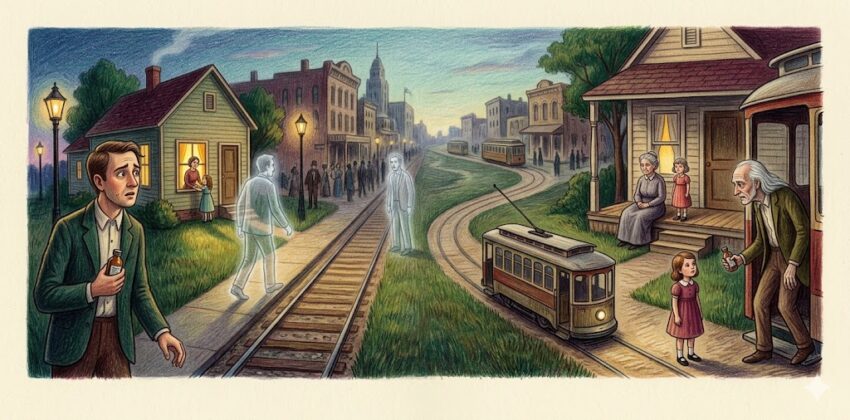
One night after supper the little girl was seized with a severe colic, and John Smothers hurried down town to get some medicine.
Một đêm sau bữa tối, cô bé bị đau bụng dữ dội, và John Smothers vội vàng xuống phố để mua thuốc.

He never came back.
Ông không bao giờ quay trở lại.

The little girl recovered and in time grew up to womanhood.
Cô bé hồi phục và theo thời gian đã trưởng thành thành một thiếu nữ.

The mother grieved very much over her husband’s disappearance, and it was nearly three months before she married again, and moved to San Antonio.
Người mẹ đau buồn rất nhiều trước sự mất tích của chồng, và gần ba tháng sau bà tái hôn rồi chuyển đến San Antonio.

The little girl also married in time, and after a few years had rolled around, she also had a little girl five years of age.
Cô bé rồi cũng kết hôn, và sau vài năm trôi qua, cô cũng có một cô con gái năm tuổi.

She still lived in the same house where they dwelt when her father had left and never returned.
Cô vẫn sống trong chính ngôi nhà nơi cha cô đã rời đi và không bao giờ trở lại.

One night by a remarkable coincidence her little girl was taken with cramp colic on the anniversary of the disappearance of John Smothers, who would now have been her grandfather if he had been alive and had a steady job.
Một đêm, trong một sự trùng hợp kỳ lạ, con gái cô bị đau bụng đúng vào ngày kỷ niệm sự mất tích của John Smothers, người lẽ ra giờ đã là ông ngoại của cô bé nếu ông còn sống và có một công việc ổn định.

“I will go downtown and get some medicine for her,” said John Smith (for it was none other than he whom she had married).
“Anh sẽ xuống phố mua thuốc cho con,” John Smith nói (và đó chính là người mà cô đã kết hôn).

“No, no, dear John,” cried his wife. “You, too, might disappear forever, and then forget to come back.”
“Không, không, anh John yêu quý,” vợ anh kêu lên. “Anh cũng có thể biến mất mãi mãi và rồi quên luôn việc quay về.”

So John Smith did not go, and together they sat by the bedside of little Pansy (for that was Pansy’s name).
Vì vậy John Smith không đi, và họ cùng ngồi bên giường của bé Pansy (đó là tên của cô bé).

End of Episode 1 — Stay tuned for the next episode! / Kết thúc Episode 1 — Hãy đón đọc episode tiếp theo!

Final Part: The Return
Phần Cuối: Sự Trở Về

After a little Pansy seemed to grow worse, and John Smith again attempted to go for medicine, but his wife would not let him.
Sau đó, khi bé Pansy có vẻ trở nặng hơn, John Smith lại định đi mua thuốc, nhưng vợ anh không cho phép.

Suddenly the door opened, and an old man, stooped and bent, with long white hair, entered the room.
Đột nhiên cánh cửa mở ra, và một ông lão lưng còng, tóc dài bạc trắng bước vào phòng.

“Hello, here is grandpa,” said Pansy. She had recognized him before any of the others.
“Chào, ông ngoại đến rồi,” Pansy nói. Cô bé nhận ra ông trước tất cả mọi người.

The old man drew a bottle of medicine from his pocket and gave Pansy a spoonful.
Ông lão lấy từ túi ra một chai thuốc và cho Pansy uống một thìa.

She got well immediately.
Cô bé khỏi bệnh ngay lập tức.

“I was a little late,” said John Smothers, “as I waited for a street car.”
“Tôi đến hơi muộn,” John Smothers nói, “vì tôi đã chờ xe điện.”

The End / Kết Thúc

Phê Bình: Irony and Time
Phê Bình: Sự Mỉa Mai và Thời Gian

This story is a brilliant example of O. Henry’s signature irony.
Câu chuyện này là một ví dụ xuất sắc về phong cách mỉa mai đặc trưng của O. Henry.

The central theme revolves around time, coincidence, and absurdity.
Chủ đề trung tâm xoay quanh thời gian, sự trùng hợp và tính phi lý.

John Smothers disappears for years over a trivial errand, only to return as if nothing happened.
John Smothers biến mất nhiều năm chỉ vì một việc nhỏ, rồi quay lại như thể không có gì xảy ra.

This exaggeration creates humor but also highlights human perception of time.
Sự phóng đại này tạo ra tiếng cười nhưng cũng làm nổi bật cách con người cảm nhận thời gian.

The narrative structure is simple yet effective, building toward a sudden twist ending.
Cấu trúc truyện đơn giản nhưng hiệu quả, dẫn đến một cái kết bất ngờ.

Pansy acts as a symbol of innocence and clarity.
Pansy đại diện cho sự ngây thơ và nhận thức rõ ràng.

She recognizes the grandfather instantly, unlike the adults who are bound by logic.
Cô bé nhận ra ông ngay lập tức, trái với người lớn bị ràng buộc bởi logic.

Philosophically, the story reflects a Stoic acceptance of absurd reality.
Về mặt triết học, câu chuyện phản ánh sự chấp nhận thực tại phi lý theo tinh thần Khắc kỷ.

Life does not always follow rational timelines.
Cuộc sống không phải lúc nào cũng tuân theo logic thời gian.

In modern life, this can be seen in delays, missed opportunities, and unexpected returns.
Trong cuộc sống hiện đại, điều này thể hiện qua sự trì hoãn, cơ hội bị bỏ lỡ và những sự trở lại bất ngờ.

The humor disguises a deeper message about patience and unpredictability.
Sự hài hước che giấu một thông điệp sâu sắc về sự kiên nhẫn và tính khó đoán.

Ultimately, the story reminds us that time is subjective and often ironic.
Cuối cùng, câu chuyện nhắc nhở rằng thời gian mang tính chủ quan và thường đầy mỉa mai.

The End / Kết Thúc

A Strange Story – Deep Learning Quiz

Mastering “A Strange Story”

Analyze O. Henry’s subversion of folklore and the absurdity of the “Missing Person” trope.

1. What is the initial conflict that causes Smyley-myley to leave his house?

A. His daughter is sick and needs medicine from the town.
✔ Correct! This creates a high-stakes, emotional reason for his departure, which O. Henry later undermines with the ending.
B. He is called to serve in a distant war.
✘ Incorrect. The story stays within a domestic setting to highlight the absurdity of the “errand.”
C. He has a heated argument with his wife.
✘ Incorrect. Smyley-myley is portrayed as a responsible family man at the start.
D. He decides to seek his fortune in a different city.
✘ Incorrect. He was only meant to go to the pharmacy and back.

2. How long does the “delay” in Smyley-myley’s return actually last?

A. A few hours, though it felt like forever to his wife.
✘ Incorrect. O. Henry uses a massive, legendary time jump.
B. Twenty years.
✔ Correct! The twenty-year gap specifically parodies the “Rip Van Winkle” motif common in folklore.
C. Five years.
✘ Incorrect. It was two full decades.
D. Until the daughter has passed away.
✘ Incorrect. The daughter is alive, though fully grown.

3. What is O. Henry’s primary goal in using the name “Smyley-myley”?

A. To show that the character is a professional clown.
✘ Incorrect. The name is more about literary style than profession.
B. To create a whimsical, nursery-rhyme tone that masks the story’s irony.
✔ Correct! The playful name contrasts with the “strange” and dark elements of the disappearance, a classic O. Henry touch.
C. To honor a famous person from O. Henry’s childhood.
✘ Incorrect. It serves as a narrative device to make the tale feel like a fable.
D. To imply the character is always happy.
✘ Incorrect. The character’s emotional state isn’t the focus; the absurdity of his actions is.

4. What “proof” of the passing time does Smyley-myley ignore upon his return?

A. The fact that his daughter is now a grown woman.
✔ Correct! He sees the physical changes in his family but behaves as if he was only gone for minutes.
B. The new buildings that have been built in the town.
✘ Incorrect. The story stays focused on the domestic space to keep the irony sharp.
C. A letter saying he had been declared dead.
✘ Incorrect. He ignores the most obvious proof: the physical aging of his loved ones.
D. The modern technology that has been invented.
✘ Incorrect. O. Henry keeps the setting vague and timeless.

5. What is Smyley-myley’s excuse for being twenty years late with the medicine?

A. He forgot the way back in the storm.
✘ Incorrect. He offers no such detailed explanation.
B. He simply says he was “delayed.”
✔ Correct! The supreme irony of the story is his understatement of a two-decade absence as a mere “delay.”
C. He claims he was abducted by magical spirits.
✘ Incorrect. That would be a traditional folk tale; O. Henry parodies this by providing a mundane excuse.
D. He tells a long story about his travels around the world.
✘ Incorrect. He says almost nothing, which is what makes it “strange.”

6. Why does Smyley-myley ask for his “supper” immediately upon his return?

A. To emphasize his total disregard for the twenty years he lost.
✔ Correct! By asking for supper, he attempts to resume a “normal” life instantly, highlighting the absurdity of the situation.
B. Because he had been starving for two decades.
✘ Incorrect. The request is a narrative device for anti-climax, not a literal sign of hunger.
C. He wants to show his wife that he still loves her cooking.
✘ Incorrect. It is about his lack of awareness (or care) regarding the passage of time.
D. He is testing his family to see if they remember him.
✘ Incorrect. He acts as if he never left.

7. What is the “twist” that O. Henry employs in this story compared to his other works?

A. The main character dies at the end.
✘ Incorrect. The ending is comedic and surreal, not tragic.
B. The twist is an “anti-climax”—nothing grand or magical is revealed.
✔ Correct! Most readers expect a supernatural explanation, but O. Henry gives us a husband making a lame excuse for a 20-year absence.
C. It is revealed that it was all a dream.
✘ Incorrect. O. Henry avoids this cliché, making the events “actually” happen within the story’s logic.
D. The daughter was the one who was actually missing.
✘ Incorrect. The focus remains on the father’s strange behavior.

8. How does the author’s tone toward the family change when Smyley-myley returns?

A. It remains dry and matter-of-fact to enhance the humor.
✔ Correct! By describing the bizarre return in a “normal” way, the author makes the situation feel even more ridiculous.
B. It becomes very emotional and tearful.
✘ Incorrect. There is no sentimentality in the ending.
C. It becomes judgmental toward the husband’s laziness.
✘ Incorrect. The author remains a neutral, ironic observer.
D. It shifts to a terrifying horror-story tone.
✘ Incorrect. The story stays firmly in the realm of satire.

9. Which literary device is MOST present in Smyley-myley’s behavior at the end?

A. Hyperbole (exaggeration).
✘ Incorrect. The situation is exaggerated, but his response is the opposite.
B. Understatement (meiosis).
✔ Correct! Calling a 20-year absence a “delay” is a massive understatement.
C. Personification.
✘ Incorrect. No inanimate objects are given human traits here.
D. Onomatopoeia.
✘ Incorrect. The focus is on the situational irony, not sound words.

10. What is the ultimate “lesson” of O. Henry’s “A Strange Story”?

A. Never leave your house during a storm.
✘ Incorrect. This is a literal interpretation that misses the satirical point.
B. Stories don’t always need logical or epic explanations to be impactful.
✔ Correct! O. Henry plays with the reader’s need for “closure” and “meaning,” leaving us with an absurd mystery instead.
C. Medicine is the most important thing in a household.
✘ Incorrect. The medicine is just a “MacGuffin” to get the plot moving.
D. Time heals all wounds.
✘ Incorrect. If anything, time in this story just makes things weirder.

Related Posts:

  • ffda0feb-d3a9-48c4-9fc8-ac43608c43c6
    A Dark Brown Dog / Con Chó Nâu Sẫm by Stephen Crane
  • 9b53a5b8-3624-430b-94c3-e5c0cbbbd07e
    'Oh, Whistle, and I'll Come to You My Lad' / 'Ôi,…
  • a0458116-ecf4-40dc-94dc-776e1ae01e57
    Fat and Thin / Béo và Gầy by Anton Chekhov
  • fd02c452-778f-49f1-b565-368ce93bb9af
    The Snows of Kilimanjaro / Tuyết Trên Đỉnh…
  • 0348d67f-26a0-4b8d-aa14-1174734290a0
    An Occurrence at Owl Creek Bridge by Ambrose Bierce
  • fa0c0596-9819-451c-a5f8-2de8743a2353
    Young Goodman Brown by Nathaniel Hawthorne

Post navigation

← A Dark Brown Dog / Con Chó Nâu Sẫm by Stephen Crane
The Ass and Its Shadow / Con Lừa và Cái Bóng by Aesop →

Leave a Reply Cancel reply

Your email address will not be published. Required fields are marked *

Related Posts:

  • ffda0feb-d3a9-48c4-9fc8-ac43608c43c6
    A Dark Brown Dog / Con Chó Nâu Sẫm by Stephen Crane
  • 9b53a5b8-3624-430b-94c3-e5c0cbbbd07e
    'Oh, Whistle, and I'll Come to You My Lad' / 'Ôi,…
  • a0458116-ecf4-40dc-94dc-776e1ae01e57
    Fat and Thin / Béo và Gầy by Anton Chekhov
  • fd02c452-778f-49f1-b565-368ce93bb9af
    The Snows of Kilimanjaro / Tuyết Trên Đỉnh…
  • 0348d67f-26a0-4b8d-aa14-1174734290a0
    An Occurrence at Owl Creek Bridge by Ambrose Bierce
  • fa0c0596-9819-451c-a5f8-2de8743a2353
    Young Goodman Brown by Nathaniel Hawthorne
© 2026 Sophie's Garden | Powered by Minimalist Blog WordPress Theme