Chỉ mất vài giây để sự chân thành biến thành sự nịnh bợ mù quáng. Cùng Sophie Garden khám phá câu chuyện kinh điển của Chekhov để thấy quyền lực có thể bóp nghẹt nhân cách con người nhanh chóng đến thế nào. Đọc ngay để không bỏ lỡ!
Fat and Thin / Béo và Gầy by Anton Chekhov
Part 1: The Reunion at the Station
Phần 1: Cuộc Tái Ngộ Tại Ga Xe Lửa
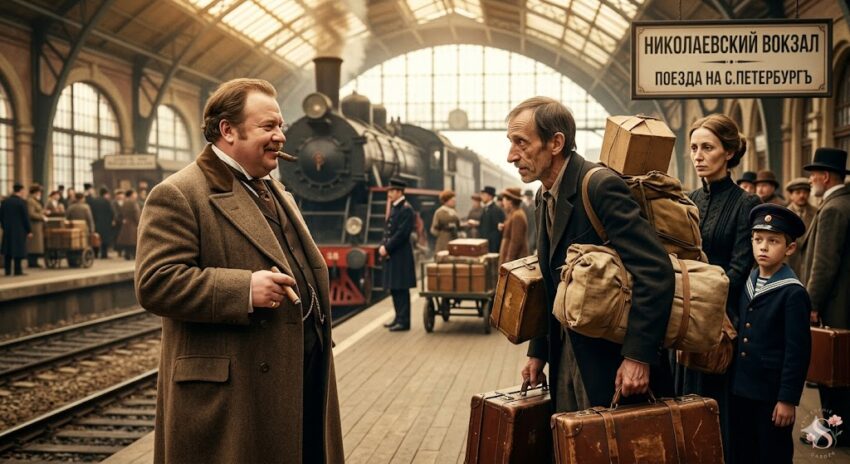
Two friends — one a fat man and the other a thin man — met at the Nikolaevsky station.
Hai người bạn — một người béo và một người gầy — gặp nhau tại ga xe lửa Nikolaevsky.
The fat man had just dined in the station and his greasy lips shone like ripe cherries.
Người béo vừa ăn tối ở ga và đôi môi bóng nhẫy của anh ta sáng lên như những quả anh đào chín.
He smelt of sherry and fleur d’orange.
Anh ta thoảng mùi rượu sherry và hoa cam.
The thin man had just slipped out of the train and was laden with portmanteaus, bundles, and bandboxes.
Người gầy vừa bước xuống tàu và mang nặng với những chiếc va-li, bọc hàng và hộp các-tông.
He smelt of ham and coffee grounds.
Anh ta thoảng mùi giăm-bông và bã cà phê.
A thin woman with a long chin, his wife, and a tall schoolboy with one eye screwed up came into view behind his back.
Một người phụ nữ gầy với cằm dài, vợ anh ta, và một cậu học sinh cao lớn với một mắt nheo lại hiện ra sau lưng anh ta.
“Porfiry,” cried the fat man on seeing the thin man. “Is it you? My dear fellow! How many summers, how many winters!”
“Porfiry,” người béo kêu lên khi thấy người gầy. “Là cậu đó sao? Bạn thân ơi! Bao nhiêu năm trời không gặp!”
“Holy saints!” cried the thin man in amazement. “Misha! The friend of my childhood! Where have you dropped from?”
“Trời ơi!” người gầy thốt lên kinh ngạc. “Misha! Người bạn thời thơ ấu của tôi! Cậu từ đâu rơi xuống vậy?”
The friends kissed each other three times, and gazed at each other with eyes full of tears.
Hai người bạn hôn nhau ba lần, và nhìn nhau với đôi mắt đầy nước mắt.
Both were agreeably astounded.
Cả hai đều vui mừng sửng sốt.
“My dear boy!” began the thin man after the kissing. “This is unexpected! This is a surprise! Come have a good look at me! Just as handsome as I used to be! Just as great a darling and a dandy! Good gracious me! Well, and how are you? Made your fortune? Married? I am married as you see. . . . This is my wife Luise, her maiden name was Vantsenbach . . . of the Lutheran persuasion. . . . And this is my son Nafanail, a schoolboy in the third class. This is the friend of my childhood, Nafanya. We were boys at school together!”
“Bạn ơi!” người gầy bắt đầu sau những nụ hôn. “Thật bất ngờ! Thật là một sự ngạc nhiên! Đến nhìn tôi xem nào! Vẫn đẹp trai như ngày xưa! Vẫn duyên dáng và bảnh bao như thế! Trời ơi! Thế nào, cậu ra sao? Giàu có chưa? Lấy vợ chưa? Tôi đã lấy vợ rồi như cậu thấy đó. . . . Đây là vợ tôi Luise, tên thời con gái là Vantsenbach . . . theo đạo Luther. . . . Và đây là con trai tôi Nafanail, học sinh lớp ba. Đây là người bạn thời thơ ấu của bố, Nafanya. Chúng tôi đã học cùng trường với nhau!”
Nafanail thought a little and took off his cap.
Nafanail suy nghĩ một chút rồi bỏ mũ ra.
“We were boys at school together,” the thin man went on. “Do you remember how they used to tease you? You were nicknamed Herostratus because you burned a hole in a schoolbook with a cigarette, and I was nicknamed Ephialtes because I was fond of telling tales. Ho–ho! . . . we were children! . . . Don’t be shy, Nafanya. Go nearer to him. And this is my wife, her maiden name was Vantsenbach, of the Lutheran persuasion. . . .”
“Chúng tôi đã là học sinh cùng trường,” người gầy tiếp tục. “Cậu có nhớ người ta hay trêu cậu không? Cậu được đặt biệt danh Herostratus vì cậu dùng thuốc lá đốt thủng một cuốn sách giáo khoa, còn tôi được đặt biệt danh Ephialtes vì tôi hay mách lẻo. Ho-ho! . . . chúng tôi hồi đó còn là trẻ con! . . . Đừng ngại, Nafanya. Lại gần bác đi. Và đây là vợ tôi, tên thời con gái là Vantsenbach, theo đạo Luther. . . .”
Nafanail thought a little and took refuge behind his father’s back.
Nafanail suy nghĩ một chút rồi núp vào sau lưng bố.
“Well, how are you doing my friend?” the fat man asked, looking enthusiastically at his friend. “Are you in the service? What grade have you reached?”
“Thế nào, bạn đang làm gì vậy?” người béo hỏi, nhiệt tình nhìn người bạn. “Cậu có đang làm việc nhà nước không? Cậu đã lên đến chức gì rồi?”
“I am, dear boy! I have been a collegiate assessor for the last two years and I have the Stanislav. The salary is poor, but that’s no great matter! The wife gives music lessons, and I go in for carving wooden cigarette cases in a private way. Capital cigarette cases! I sell them for a rouble each. If any one takes ten or more I make a reduction of course. We get along somehow. I served as a clerk, you know, and now I have been transferred here as a head clerk in the same department. I am going to serve here. And what about you? I bet you are a civil councillor by now? Eh?”
“Có chứ, bạn ơi! Tôi đã là thẩm định viên cấp tỉnh được hai năm rồi và tôi có huân chương Stanislav. Lương thì ít, nhưng không sao! Vợ tôi dạy nhạc, và tôi thì riêng tư làm nghề khắc hộp thuốc lá bằng gỗ. Những chiếc hộp thuốc lá tuyệt lắm! Tôi bán mỗi cái một rúp. Nếu ai mua mười cái trở lên thì tôi giảm giá tất nhiên. Chúng tôi xoay xở được. Tôi đã làm thư ký, cậu biết đó, và bây giờ tôi được chuyển đến đây làm trưởng phòng trong cùng bộ. Tôi sẽ phục vụ ở đây. Còn cậu thì sao? Tôi cá là cậu đã là cố vấn dân sự rồi chứ? Nhỉ?”
End of Episode 1 — Stay tuned for the next episode! / Kết thúc Episode 1 — Hãy đón đọc episode tiếp theo!
Final Part: The Rank Revealed
Part Cuối: Chức Tước Được Tiết Lộ
“No dear boy, go higher than that,” said the fat man. “I have risen to privy councillor already . . . I have two stars.”
“Không, bạn ơi, cao hơn thế nữa,” người béo nói. “Tôi đã lên đến cơ mật cố vấn rồi . . . Tôi có hai ngôi sao.”
The thin man turned pale and rigid all at once, but soon his face twisted in all directions in the broadest smile; it seemed as though sparks were flashing from his face and eyes.
Người gầy tái mặt và cứng đờ ngay lập tức, nhưng chẳng mấy chốc khuôn mặt anh ta méo xệch theo mọi hướng thành nụ cười rộng nhất; có vẻ như những tia sáng đang bắn ra từ mặt và mắt anh ta.
He squirmed, he doubled together, crumpled up. . . . His portmanteaus, bundles and cardboard boxes seemed to shrink and crumple up too. . . . His wife’s long chin grew longer still; Nafanail drew himself up to attention and fastened all the buttons of his uniform.
Anh ta vặn vẹo, anh ta cúi rạp xuống, nhăn nhúm lại. . . . Những chiếc va-li, bọc hàng và hộp các-tông của anh ta cũng có vẻ thu nhỏ và nhăn nhúm lại. . . . Cái cằm dài của vợ anh ta còn dài thêm nữa; Nafanail đứng nghiêm và cài tất cả các cúc áo đồng phục.
“Your Excellency, I . . . delighted! The friend, one may say, of childhood and to have turned into such a great man! He–he!”
“Thưa Đại nhân, tôi . . . vô cùng sung sướng! Người bạn, có thể nói, thời thơ ấu mà đã trở thành người vĩ đại như vậy! Hê-hê!”
“Come, come!” the fat man frowned. “What’s this tone for? You and I were friends as boys, and there is no need of this official obsequiousness!”
“Thôi nào, thôi nào!” người béo cau mày. “Tại sao lại nói giọng như vậy? Cậu và tôi là bạn từ hồi còn nhỏ, và không cần phải cư xử kiểu nịnh bợ quan phương như vậy!”
“Merciful heavens, your Excellency! What are you saying. . . ?” sniggered the thin man, wriggling more than ever. “Your Excellency’s gracious attention is like refreshing manna. . . . This, your Excellency, is my son Nafanail, . . . my wife Luise, a Lutheran in a certain sense.”
“Trời thương xót, thưa Đại nhân! Ngài đang nói gì vậy. . . ?” người gầy khúc khích cười, vặn vẹo hơn bao giờ hết. “Sự quan tâm ân cần của Đại nhân như manna thơm mát. . . . Đây, thưa Đại nhân, là con trai tôi Nafanail, . . . vợ tôi Luise, một người theo đạo Luther theo một nghĩa nào đó.”
The fat man was about to make some protest, but the face of the thin man wore an expression of such reverence, sugariness, and mawkish respectfulness that the privy councillor was sickened.
Người béo định phản đối, nhưng khuôn mặt người gầy mang biểu cảm kính trọng, ngọt ngào và xu nịnh đến mức vị cơ mật cố vấn cảm thấy ghê tởm.
He turned away from the thin man, giving him his hand at parting.
Ông ta quay mặt đi khỏi người gầy, đưa tay ra cho người đó khi chia tay.
The thin man pressed three fingers, bowed his whole body and sniggered like a Chinaman: “He–he–he!”
Người gầy nắm lấy ba ngón tay, cúi rạp cả người và khúc khích cười như người Tàu: “Hê-hê-hê!”
His wife smiled. Nafanail scraped with his foot and dropped his cap. All three were agreeably overwhelmed.
Vợ anh ta mỉm cười. Nafanail cọ chân xuống đất và đánh rơi mũ. Cả ba đều bị choáng ngợp một cách dễ chịu.
The End / Kết Thúc
Special Topic: Chekhov’s Satire on Social Hierarchy
Bình Luận: Sự Châm Biếm của Chekhov về Phân Cấp Xã Hội
“Fat and Thin” (1883) is one of Anton Chekhov’s earliest and most perfectly constructed comic stories — a miniature masterpiece that delivers its satirical payload in under a thousand words.
“Béo và Gầy” (1883) là một trong những truyện hài sớm nhất và được xây dựng hoàn hảo nhất của Anton Chekhov — một kiệt tác thu nhỏ chuyển tải nội dung châm biếm của nó trong chưa đến một nghìn từ.
The premise is deceptively simple: two old school friends meet by chance at a railway station and the warmth of their reunion is instantly destroyed the moment one reveals he has risen to the rank of privy councillor — near the top of Russia’s rigid Table of Ranks.
Tiền đề thật đơn giản đến mức đánh lừa: hai người bạn học cũ tình cờ gặp nhau tại ga xe lửa và sự ấm áp của cuộc tái ngộ bị phá hủy ngay lập tức khoảnh khắc một người tiết lộ mình đã lên đến chức cơ mật cố vấn — gần đỉnh của Bảng Cấp bậc cứng nhắc của nước Nga.
What Chekhov captures with such devastating precision is the speed of the transformation — how quickly and completely a human being can abandon genuine feeling the moment social hierarchy asserts itself.
Điều Chekhov nắm bắt với sự chính xác tàn khốc như vậy là tốc độ của sự biến đổi — nhanh chóng và toàn diện đến mức nào một con người có thể từ bỏ cảm xúc chân thật ngay khoảnh khắc phân cấp xã hội tự khẳng định mình.
The thin man’s transformation is described with brilliant physical comedy: he squirms, doubles over, crumples up — and even his luggage seems to shrink in sympathy, and his wife’s chin grows longer, and his son snaps to attention.
Sự biến đổi của người gầy được mô tả với hài kịch thể xác xuất sắc: anh ta vặn vẹo, cúi gập, nhăn nhúm lại — và ngay cả hành lý của anh ta cũng có vẻ thu nhỏ lại như đồng cảm, cằm của vợ anh ta dài thêm, và con trai anh ta đứng nghiêm.
The fat man — the superior — is not villainous; he is genuinely uncomfortable with the sudden servility of his old friend, and his attempt to restore the old equality is touching in its sincerity: “You and I were friends as boys, and there is no need of this official obsequiousness!”
Người béo — kẻ bề trên — không phải là kẻ xấu xa; ông ta thực sự khó chịu với sự nịnh bợ đột ngột của người bạn cũ, và nỗ lực của ông ta để khôi phục bình đẳng xưa kia thật xúc động trong sự chân thành: “Cậu và tôi là bạn từ hồi còn nhỏ, và không cần phải cư xử kiểu nịnh bợ quan phương như vậy!”
But it is too late. The social machinery has been set in motion, and it cannot be stopped by individual goodwill.
Nhưng đã quá muộn. Guồng máy xã hội đã được khởi động, và không thể bị dừng lại bởi thiện chí cá nhân.
The thin man cannot hear the fat man’s plea — it does not compute within the system of values he has been conditioned to live by — and the result is that the fat man is “sickened” and turns away.
Người gầy không thể nghe thấy lời cầu xin của người béo — nó không khớp với hệ thống giá trị mà anh ta đã được điều kiện hóa để sống theo — và kết quả là người béo cảm thấy “ghê tởm” và quay đi.
Two old friends who genuinely loved each other as boys are now permanently separated — not by any quarrel, not by any betrayal, but simply by a difference in rank.
Hai người bạn cũ đã thực sự yêu thương nhau từ hồi còn nhỏ bây giờ bị chia cách vĩnh viễn — không phải vì cuộc cãi vã nào, không phải vì sự phản bội nào, mà chỉ đơn giản là vì sự khác biệt về chức tước.
Chekhov wrote this story at twenty-three, and it already displays the qualities that would define his mature work: compression, irony, an eye for the revealing physical detail, and a profound sympathy for human beings trapped in systems they did not choose and cannot escape.
Chekhov viết câu chuyện này lúc hai mươi ba tuổi, và nó đã thể hiện những phẩm chất sẽ định hình tác phẩm trưởng thành của ông: sự cô đọng, sự mỉa mai, con mắt nhạy bén với chi tiết thể xác tiết lộ bản chất, và sự đồng cảm sâu sắc với những con người bị mắc kẹt trong những hệ thống mà họ không chọn lựa và không thể thoát ra.
For Vietnamese readers, the story resonates deeply with a culture that has its own elaborate hierarchies of age, rank, and social position — and with the universal human experience of watching a relationship change the moment power enters the room.
Đối với độc giả Việt Nam, câu chuyện vang vọng sâu sắc với một nền văn hóa có những phân cấp tinh vi riêng về tuổi tác, địa vị và vị thế xã hội — và với trải nghiệm phổ quát của con người khi chứng kiến một mối quan hệ thay đổi ngay khoảnh khắc quyền lực bước vào căn phòng.
The ending — “All three were agreeably overwhelmed” — is pure Chekhov: ironic, sad, and utterly precise.
Cái kết — “Cả ba đều bị choáng ngợp một cách dễ chịu” — là Chekhov thuần túy: mỉa mai, buồn bã, và hoàn toàn chính xác.
The thin man and his family are “agreeably overwhelmed” by the encounter with greatness — they feel no shame, only a kind of ecstatic submission — while the fat man walks away diminished, having lost a friend he might have kept if only rank had never entered their conversation.
Người gầy và gia đình anh ta bị “choáng ngợp một cách dễ chịu” bởi cuộc gặp gỡ với sự vĩ đại — họ không cảm thấy xấu hổ, chỉ là một loại sự phục tùng ngây ngất — trong khi người béo bước đi với cảm giác bị thu nhỏ, đã mất đi một người bạn mà anh ta có thể đã giữ lại nếu chức tước chưa bao giờ bước vào cuộc trò chuyện của họ.
The End / Kết Thúc
Two friends — one a fat man and the other a thin man — met at the Nikolaevsky station. The fat man had just dined in the station and his greasy lips shone like ripe cherries. He smelt of sherry and fleur d’orange. The thin man had just slipped out of the train and was laden with portmanteaus, bundles, and bandboxes. He smelt of ham and coffee grounds. A thin woman with a long chin, his wife, and a tall schoolboy with one eye screwed up came into view behind his back.
“Porfiry,” cried the fat man on seeing the thin man. “Is it you? My dear fellow! How many summers, how many winters!”
“Holy saints!” cried the thin man in amazement. “Misha! The friend of my childhood! Where have you dropped from?”
The friends kissed each other three times, and gazed at each other with eyes full of tears. Both were agreeably astounded.
“My dear boy!” began the thin man after the kissing. “This is unexpected! This is a surprise! Come have a good look at me! Just as handsome as I used to be! Just as great a darling and a dandy! Good gracious me! Well, and how are you? Made your fortune? Married? I am married as you see. . . . This is my wife Luise, her maiden name was Vantsenbach . . . of the Lutheran persuasion. . . . And this is my son Nafanail, a schoolboy in the third class. This is the friend of my childhood, Nafanya. We were boys at school together!”
Nafanail thought a little and took off his cap.
“We were boys at school together,” the thin man went on. “Do you remember how they used to tease you? You were nicknamed Herostratus because you burned a hole in a schoolbook with a cigarette, and I was nicknamed Ephialtes because I was fond of telling tales. Ho–ho! . . . we were children! . . . Don’t be shy, Nafanya. Go nearer to him. And this is my wife, her maiden name was Vantsenbach, of the Lutheran persuasion. . . .”
Nafanail thought a little and took refuge behind his father’s back.
“Well, how are you doing my friend?” the fat man asked, looking enthusiastically at his friend. “Are you in the service? What grade have you reached?”
“I am, dear boy! I have been a collegiate assessor for the last two years and I have the Stanislav. The salary is poor, but that’s no great matter! The wife gives music lessons, and I go in for carving wooden cigarette cases in a private way. Capital cigarette cases! I sell them for a rouble each. If any one takes ten or more I make a reduction of course. We get along somehow. I served as a clerk, you know, and now I have been transferred here as a head clerk in the same department. I am going to serve here. And what about you? I bet you are a civil councillor by now? Eh?”
“No dear boy, go higher than that,” said the fat man. “I have risen to privy councillor already . . . I have two stars.”
The thin man turned pale and rigid all at once, but soon his face twisted in all directions in the broadest smile; it seemed as though sparks were flashing from his face and eyes. He squirmed, he doubled together, crumpled up. . . . His portmanteaus, bundles and cardboard boxes seemed to shrink and crumple up too. . . . His wife’s long chin grew longer still; Nafanail drew himself up to attention and fastened all the buttons of his uniform.
“Your Excellency, I . . . delighted! The friend, one may say, of childhood and to have turned into such a great man! He–he!”
“Come, come!” the fat man frowned. “What’s this tone for? You and I were friends as boys, and there is no need of this official obsequiousness!”
“Merciful heavens, your Excellency! What are you saying. . . ?” sniggered the thin man, wriggling more than ever. “Your Excellency’s gracious attention is like refreshing manna. . . . This, your Excellency, is my son Nafanail, . . . my wife Luise, a Lutheran in a certain sense.”
The fat man was about to make some protest, but the face of the thin man wore an expression of such reverence, sugariness, and mawkish respectfulness that the privy councillor was sickened. He turned away from the thin man, giving him his hand at parting.
The thin man pressed three fingers, bowed his whole body and sniggered like a Chinaman: “He–he–he!” His wife smiled. Nafanail scraped with his foot and dropped his cap. All three were agreeably overwhelmed.