The question of whether one truly governs one’s own life is among the most disquieting a person can entertain — not because the answer is categorically bleak, but because it resists the clean resolution we instinctively crave. We are, at once, agents and subjects: beings who act upon the world and are acted upon by…
Author: Sophie
The Quiet Revolt: Reclaiming Humanity in an Age of Alienated Labour
In the architecture of modern capitalism, the human being occupies a peculiar and paradoxical position: simultaneously the engine of the entire system and its most expendable component. We produce, we optimise, we scale — and somewhere in the relentless rhythm of deliverables and performance reviews, we misplace something irretrievable. Not our productivity. Not our ambition….
The Platonic Shadow: On the Ontology of Mathematics
The Platonic Shadow: On the Ontology of Mathematics Among the most enduring debates in the philosophy of science is the ontological status of mathematical entities. Are numbers, sets, and functions merely useful fictions—cerebral constructs designed to categorize our sensory experiences—or do they exist in a “Platonic realm,” independent of human thought and the physical universe?…
The Illusion of Separation Between Humanity and Nature
The Illusion of Separation Between Humanity and Nature A persistent assumption underlying modern society is the idea that humanity exists apart from the natural world. Cities, technologies, and economic systems are often perceived as distinct from nature, as though human activity operates within a separate domain governed by its own rules. This conceptual separation has…
The Spectator Beyond the Market
The Spectator Beyond the Market Life, when viewed at close range, often resembles a vast and restless marketplace. Individuals move with urgency, negotiating, competing, acquiring, and defending. Some act as sellers, offering their labor, ideas, or identity in exchange for recognition and material gain. Others assume the role of buyers, selecting, comparing, and consuming what…
The Discipline of Inner Direction
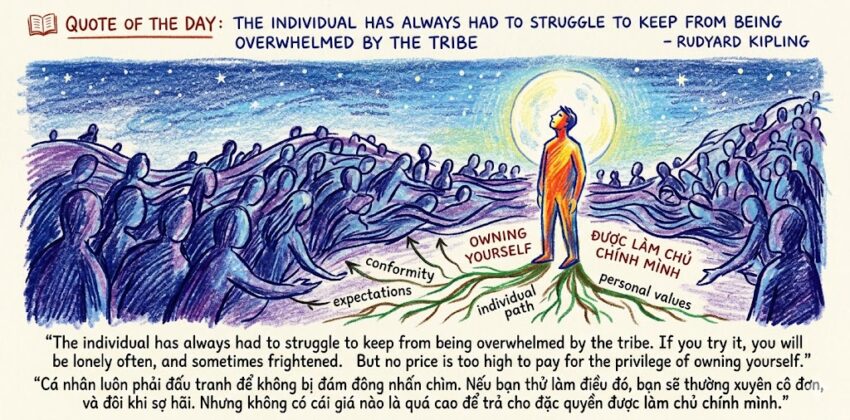
The Discipline of Inner Direction Human life is often imagined as a process of ascent — a gradual movement upward along some form of ladder. Whether defined in terms of career advancement, social status, or financial accumulation, this metaphor exerts a powerful influence on how individuals orient their efforts. Each step promises proximity to a…
The Architecture of Pressure
Human life, often narrated as a journey of freedom and self-realization, can equally be understood as a continuous negotiation with pressure. From the moment of birth to the inevitability of death, existence unfolds within a layered system of constraints — physical, social, and psychological — each exerting its own demands upon the individual. These pressures…
The Externalization of Harm
The rapid expansion of ride-hailing platforms such as Uber and Grab has been widely celebrated as a triumph of technological innovation. By offering convenient, on-demand mobility, these services have reshaped urban transportation, providing flexible income opportunities for drivers and increased accessibility for passengers. Yet beneath this narrative of efficiency and convenience lies a more complex…
The Transience of Belonging
“Never say of anything, ‘I have lost it’; but, ‘I have returned it.’ Is your child dead? It is returned. Is your wife dead? She is returned. Is your estate taken away? Well, and is not that likewise returned?” — Epictetus The Transience of Belonging There is a persistent tendency in human thought to assume…
The Collapse of Moral Vocation
The Collapse of Moral Vocation One of the quiet tragedies of modern capitalism is not merely that it distributes wealth unevenly, but that it transforms the meaning of work itself. Professions once regarded as expressions of moral duty — above all medicine and education — increasingly risk being interpreted through the language of marketability, income,…