Từ thời Hy Lạp cổ đại, ngụ ngôn nhỏ này của Aesop đã cảnh báo về một bẫy rất con người: mù quáng bắt chước người khác mà không hiểu bản chất thật sự của họ—và cái giá phải trả có thể là tất cả.
The Ass and the Grasshoppers / Con Lừa và Những Chú Châu Chấu by Aesop
Final Part: The Donkey Who Drank Only Dew
Phần Cuối: Con Lừa Chỉ Uống Sương
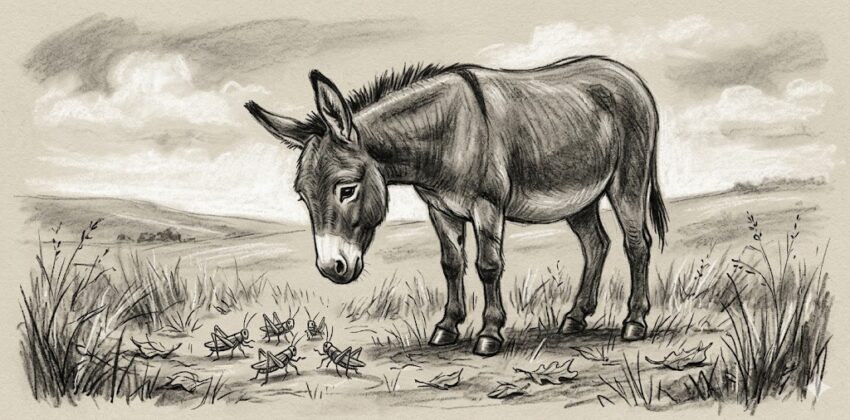
One day, a Donkey was walking through a pasture when he came across some Grasshoppers chirping merrily in a grassy corner of the field.
Một ngày nọ, một con Lừa đang đi dạo qua đồng cỏ thì tình cờ gặp một đàn Châu Chấu đang véo von ca hát vui vẻ ở một góc đồng xanh mướt.
He listened with great admiration to their song.
Nó lắng nghe tiếng hát của chúng với lòng ngưỡng mộ vô cùng.
It was such a joyful sound that his pleasure-loving heart filled with a wish to sing just as beautifully as they did.
Âm thanh ấy vui tươi đến nỗi trái tim háo hưởng thụ của nó tràn đầy ước ao được cất giọng hát hay đẹp như vậy.
“What is it,” he asked very respectfully, “that gives you such beautiful voices? Is there some special food you eat, or some magical drink that makes you sing so wonderfully?”
“Thứ gì vậy,” nó hỏi rất lễ phép, “đã ban cho các bạn giọng hát tuyệt vời như thế? Có phải có thức ăn đặc biệt nào, hay đồ uống thần kỳ nào khiến các bạn hót hay đến vậy không?”
“Yes,” said the Grasshoppers, who loved a good joke. “It is the dew we drink! Try some and see.”
“Có chứ,” đàn Châu Chấu đáp, chúng rất thích trêu đùa. “Chính là sương mà chúng tôi uống đó! Hãy thử xem sao.”
From that day on, the Donkey refused to eat or drink anything but dew.
Kể từ ngày đó, con Lừa nhất quyết không ăn không uống thứ gì ngoài sương mai.
Naturally, the poor foolish Donkey soon died.
Dĩ nhiên, con Lừa tội nghiệp và ngu ngốc ấy chẳng bao lâu sau đã chết.
The laws of nature are unchangeable.
Các quy luật của tự nhiên là bất biến.
The End / Kết Thúc
Special Topic: Admiration, Imitation, and the Fatal Misunderstanding
Bình Luận: Ngưỡng Mộ, Bắt Chước, và Sự Hiểu Lầm Chết Người
“The Ass and the Grasshoppers” is one of Aesop’s most quietly devastating fables — a story so short it barely takes a minute to read, yet so precise in its diagnosis of human folly that it has endured for over two thousand years.
“Con Lừa và Những Chú Châu Chấu” là một trong những ngụ ngôn lặng lẽ mà tàn khốc nhất của Aesop — câu chuyện ngắn đến mức chỉ mất chưa đầy một phút để đọc, thế nhưng lại chính xác đến mức đáng sợ trong việc chẩn đoán sự ngu ngốc của con người, đến nỗi nó tồn tại hơn hai nghìn năm qua.
At its heart, the fable is about the fatal gap between admiring a quality and understanding its source.
Cốt lõi của ngụ ngôn này là khoảng cách chết người giữa việc ngưỡng mộ một phẩm chất và hiểu được nguồn gốc thật sự của nó.
The Donkey hears the Grasshoppers singing and is genuinely moved — there is nothing wrong with that impulse in itself.
Con Lừa nghe tiếng Châu Chấu hát và thực sự bị xúc động — bản thân cái xung động đó không có gì sai cả.
Admiration is the beginning of learning, and the desire to improve oneself is noble.
Sự ngưỡng mộ là khởi đầu của việc học hỏi, và khao khát tự hoàn thiện bản thân là điều đáng trân trọng.
But the Donkey makes a catastrophic error in reasoning: he assumes that what the Grasshoppers do is caused by what they consume.
Nhưng con Lừa đã mắc một sai lầm thảm khốc trong suy luận: nó giả định rằng điều Châu Chấu làm được là do thứ chúng tiêu thụ.
He confuses correlation with causation — and pays for that confusion with his life.
Nó nhầm lẫn giữa tương quan và nhân quả — và trả giá cho sự nhầm lẫn đó bằng mạng sống của mình.
The Grasshoppers, of course, are not entirely innocent here.
Tất nhiên, đàn Châu Chấu cũng không hoàn toàn vô tội trong câu chuyện này.
They “loved a good joke” — and their joke kills.
Chúng “rất thích trêu đùa” — và trò đùa của chúng gây ra cái chết.
Yet Aesop does not linger on their cruelty; the moral weight falls entirely on the Donkey’s gullibility.
Thế nhưng Aesop không dừng lại ở sự độc ác của chúng; toàn bộ sức nặng đạo đức đổ xuống sự cả tin của con Lừa.
This is deliberate: the fable is not a warning against tricksters, but against the willingness to be tricked — against the kind of desperate wanting that bypasses all reason.
Đây là có chủ ý: ngụ ngôn không phải lời cảnh báo chống lại kẻ lừa đảo, mà chống lại sự sẵn sàng bị lừa — chống lại kiểu ham muốn tuyệt vọng khiến người ta bỏ qua mọi lý trí.
In the original Greek tradition, the singing insects were cicadas, not grasshoppers — and this detail matters enormously.
Trong truyền thống Hy Lạp nguyên bản, loài côn trùng ca hát là ve sầu, không phải châu chấu — và chi tiết này có ý nghĩa vô cùng quan trọng.
Cicadas held a sacred place in ancient Greek culture: they were associated with the Muses, with divine inspiration, with a mode of existence beyond the ordinary.
Ve sầu chiếm một vị trí thiêng liêng trong văn hóa Hy Lạp cổ đại: chúng gắn liền với các Nàng Thơ, với nguồn cảm hứng thần thánh, với một phương thức tồn tại vượt lên trên điều bình thường.
The Donkey is not just chasing a pleasant sound — he is chasing transcendence itself, and he does so through the most literal, material means imaginable: changing his diet.
Con Lừa không chỉ đang đuổi theo một âm thanh dễ chịu — nó đang đuổi theo chính sự siêu việt, và nó làm điều đó bằng phương tiện vật chất, cụ thể nhất có thể tưởng tượng: thay đổi chế độ ăn uống.
The absurdity is total — and that is Aesop’s point.
Sự vô lý là hoàn toàn — và đó chính là điều Aesop muốn nói.
The fable’s final line — “The laws of nature are unchangeable” — is among the most philosophical conclusions in the entire Aesopic canon.
Câu kết của ngụ ngôn — “Các quy luật của tự nhiên là bất biến” — là một trong những kết luận mang tính triết học sâu sắc nhất trong toàn bộ kho tàng ngụ ngôn Aesop.
It does not say “do not be greedy” or “do not trust strangers” — it says something far more radical: you cannot change what you fundamentally are by copying the surface behaviors of another creature.
Nó không nói “đừng tham lam” hay “đừng tin người lạ” — nó nói điều gì đó triệt để hơn nhiều: bạn không thể thay đổi bản chất căn bản của mình bằng cách sao chép các hành vi bề ngoài của một sinh vật khác.
A donkey cannot become a cicada by drinking dew, just as we cannot acquire wisdom by mimicking the habits of the wise without understanding why those habits work.
Một con lừa không thể trở thành ve sầu bằng cách uống sương, cũng như chúng ta không thể có được sự khôn ngoan bằng cách bắt chước thói quen của người thông thái mà không hiểu tại sao những thói quen đó lại hiệu quả.
Two millennia later, this fable still finds its mark — in every shortcut promised by a wellness trend, in every self-help formula that claims to transplant someone else’s success into your life unchanged.
Hai thiên niên kỷ sau, ngụ ngôn này vẫn còn nguyên giá trị — trong mọi con đường tắt mà các xu hướng sức khỏe hứa hẹn, trong mọi công thức tự giúp bản thân tuyên bố có thể cấy ghép thành công của người khác vào cuộc sống của bạn mà không cần thay đổi gì.
Aesop’s donkey is eternal — and so, unfortunately, is his mistake.
Con lừa của Aesop là vĩnh cửu — và thật đáng tiếc, sai lầm của nó cũng vậy.
The End / Kết Thúc
Mastering “The Ass and the Grasshoppers”
Explore the dangers of envy and the pursuit of a nature that is not your own.
1. What initially charms the Ass when he hears the Grasshoppers?
2. What question does the Ass ask the Grasshoppers?
3. What is the Grasshoppers’ reply to the Ass’s question?
4. What is the tragic mistake the Ass makes after hearing their answer?
5. What does the “Dew” symbolize in this fable?
6. What is the primary moral of the story?
7. Why is the Ass’s envy considered “foolish” in the analysis?
8. How does this fable reflect the concept of “Natural Law”?
9. What literary term describes the Ass’s attempt to be like the Grasshoppers?
10. If the Ass had “Deep Learning” wisdom, what would he have done instead?