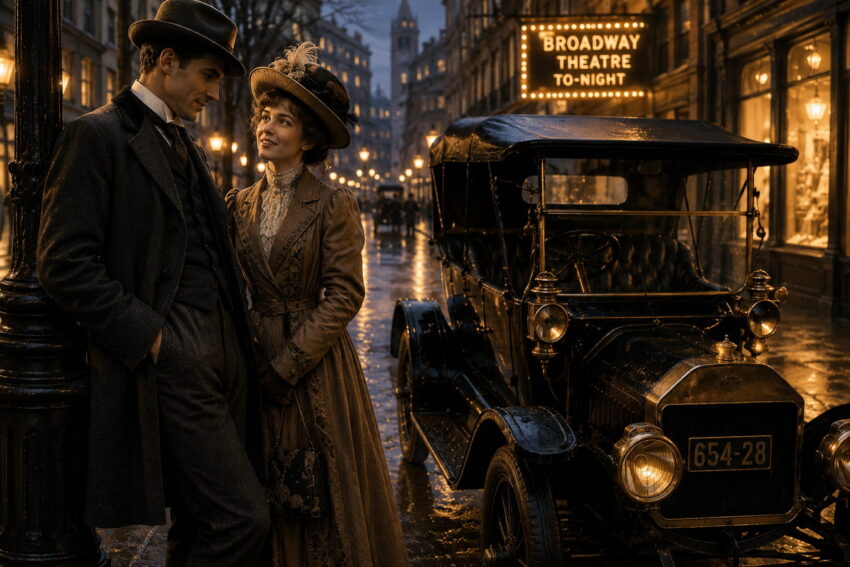
Một trong những truyện ngắn duyên dáng nhất của O. Henry — “While the Auto Waits” kể về cuộc gặp gỡ trên ghế công viên giữa một chàng trai và một cô gái bí ẩn, mỗi người đang đóng một vai không phải của mình, cho đến khi cú twist cuối cùng lật ngược tất cả.
While the Auto Waits / Trong Khi Xe Ô Tô Chờ by O. Henry
Part 1: The Park Bench
Phần 1: Chiếc Ghế Công Viên
Promptly at the beginning of twilight, came again to that quiet corner of that quiet, small park the girl in gray.
Đúng lúc chạng vạng bắt đầu, cô gái mặc đồ xám lại đến góc yên tĩnh của công viên nhỏ yên tĩnh đó.
She sat upon a bench and read a book, for there was yet to come a half hour in which print could be accomplished.
Cô ngồi xuống ghế và đọc sách, vì vẫn còn nửa tiếng nữa đủ sáng để đọc.
To repeat: Her dress was gray, and plain enough to mask its impeccancy of style and fit.
Để nhắc lại: Váy cô màu xám, và đơn giản đủ để che đi sự hoàn hảo tinh tế về kiểu dáng và đường may.
A large-meshed veil imprisoned her turban hat and a face that shone through it with a calm and unconscious beauty.
Một chiếc mạng lưới thưa giam giữ chiếc mũ turban và một khuôn mặt tỏa sáng xuyên qua đó với vẻ đẹp bình thản và vô tình.
She had come there at the same hour on the day previous, and on the day before that; and there was one who knew it.
Cô đã đến đó vào giờ đó ngày hôm trước, và ngày trước nữa; và có một người biết điều đó.
The young man who knew it hovered near, relying upon burnt sacrifices to the great joss, Luck.
Chàng trai biết điều đó lởn vởn gần đó, trông cậy vào những lễ vật dâng lên thần may mắn vĩ đại.
His piety was rewarded, for, in turning a page, her book slipped from her fingers and bounded from the bench a full yard away.
Lòng thành kính của anh được đền đáp, vì khi lật trang, cuốn sách tuột khỏi tay cô và văng xa khỏi ghế một thước.
The young man pounced upon it with instant avidity, returning it to its owner with that air that seems to flourish in parks and public places–a compound of gallantry and hope, tempered with respect for the policeman on the beat.
Chàng trai chộp lấy ngay với sự hào hứng tức thì, trả lại cho chủ nhân với thái độ dường như nở rộ ở các công viên và nơi công cộng — một hỗn hợp của phong độ và hy vọng, được kiềm chế bởi sự tôn trọng cảnh sát tuần tra.
In a pleasant voice, he risked an inconsequent remark upon the weather that introductory topic responsible for so much of the world’s unhappiness–and stood poised for a moment, awaiting his fate.
Bằng giọng dễ chịu, anh liều miệng nhận xét vô nghĩa về thời tiết — đề tài mở đầu chịu trách nhiệm cho bao nhiêu nỗi bất hạnh trên thế giới — và đứng sẵn một khoảnh khắc, chờ đợi số phận của mình.
The girl looked him over leisurely; at his ordinary, neat dress and his features distinguished by nothing particular in the way of expression.
Cô gái nhìn anh thong thả; bộ quần áo gọn gàng bình thường và khuôn mặt không có gì đặc biệt về biểu cảm.
“You may sit down, if you like,” she said, in a full, deliberate contralto. “Really, I would like to have you do so. The light is too bad for reading. I would prefer to talk.”
“Anh có thể ngồi xuống, nếu muốn,” cô nói bằng giọng contralto đầy đặn, thận trọng. “Thật ra, tôi muốn anh làm vậy. Ánh sáng quá tệ để đọc. Tôi thích nói chuyện hơn.”
The vassal of Luck slid upon the seat by her side with complaisance.
Đầy tớ của Vận May trượt xuống chỗ ngồi bên cạnh cô với vẻ vui vẻ chiều ý.
“Do you know,” he said, speaking the formula with which park chairmen open their meetings, “that you are quite the stunningest girl I have seen in a long time? I had my eye on you yesterday. Didn’t know somebody was bowled over by those pretty lamps of yours, did you, honeysuckle?”
“Cô có biết không,” anh nói bằng công thức mở đầu của những người quen làm quen ở công viên, “rằng cô là cô gái ấn tượng nhất tôi thấy trong một thời gian dài? Hôm qua tôi để ý cô rồi. Không biết có ai bị mê hồn bởi đôi mắt đẹp của cô đâu nhỉ, hoa kim ngân?”
“Whoever you are,” said the girl, in icy tones, “you must remember that I am a lady. I will excuse the remark you have just made because the mistake was, doubtless, not an unnatural one–in your circle. I asked you to sit down; if the invitation must constitute me your honeysuckle, consider it withdrawn.”
“Dù anh là ai,” cô nói bằng giọng lạnh lùng, “anh phải nhớ rằng tôi là quý bà. Tôi sẽ bỏ qua lời nhận xét anh vừa nói vì sai lầm đó, dù sao, không phải là điều bất thường — trong giới của anh. Tôi mời anh ngồi xuống; nếu lời mời đó có nghĩa tôi là hoa kim ngân của anh, hãy coi như lời mời đã được rút lại.”
“I earnestly beg your pardon,” pleaded the young man. His expression of satisfaction had changed to one of penitence and humility. “It was my fault, you know–I mean, there are girls in parks, you know–that is, of course, you don’t know, but–“
“Tôi thành thật xin lỗi cô,” chàng trai van xin. Biểu hiện thỏa mãn của anh đã chuyển thành vẻ hối hận và khiêm nhường. “Đó là lỗi của tôi, cô biết không — ý tôi là, có những cô gái ở công viên, cô biết không — nghĩa là, tất nhiên, cô không biết, nhưng –“
“Abandon the subject, if you please. Of course I know. Now, tell me about these people passing and crowding, each way, along these paths. Where are they going? Why do they hurry so? Are they happy?”
“Hãy bỏ qua chủ đề đó, nếu anh vui lòng. Tất nhiên tôi biết. Bây giờ, hãy kể cho tôi nghe về những người đi qua và tấp nập theo mọi hướng trên những con đường này. Họ đi đâu? Tại sao họ vội vã vậy? Họ có hạnh phúc không?”
The young man had promptly abandoned his air of coquetry. His cue was now for a waiting part; he could not guess the role he would be expected to play.
Chàng trai đã nhanh chóng bỏ đi vẻ tán tỉnh. Lúc này anh phải đóng vai chờ đợi; anh không thể đoán vai trò anh sẽ được mong đợi đóng.
“It is interesting to watch them,” he replied, postulating her mood. “It is the wonderful drama of life. Some are going to supper and some to–er–other places. One wonders what their histories are.”
“Thật thú vị khi quan sát họ,” anh đáp, đoán tâm trạng cô. “Đó là vở kịch tuyệt vời của cuộc sống. Một số đang đi ăn tối và một số đi đến — ờ — những nơi khác. Người ta tự hỏi câu chuyện của họ là gì.”
“I do not,” said the girl; “I am not so inquisitive. I come here to sit because here, only, can I be near the great, common, throbbing heart of humanity. My part in life is cast where its beats are never felt. Can you surmise why I spoke to you, Mr.–?”
“Tôi không vậy,” cô nói; “Tôi không tò mò như vậy. Tôi đến đây ngồi vì chỉ ở đây tôi mới có thể gần trái tim vĩ đại, phổ thông, đập thổn thức của nhân loại. Vai của tôi trong cuộc sống được đặt ở nơi những nhịp đập đó không bao giờ được cảm nhận. Anh có thể đoán tại sao tôi nói chuyện với anh không, ông –?”
“Parkenstacker,” supplied the young man. Then he looked eager and hopeful.
“Parkenstacker,” chàng trai cung cấp. Rồi anh trông háo hức và hy vọng.
“No,” said the girl, holding up a slender finger, and smiling slightly. “You would recognize it immediately. It is impossible to keep one’s name out of print. Or even one’s portrait. This veil and this hat of my maid furnish me with an incog. You should have seen the chauffeur stare at it when he thought I did not see. Candidly, there are five or six names that belong in the holy of holies, and mine, by the accident of birth, is one of them. I spoke to you, Mr. Stackenpot–“
“Không,” cô gái nói, giơ ngón tay thon lên, mỉm cười nhẹ. “Anh sẽ nhận ra ngay. Không thể giữ tên mình khỏi mặt báo. Hay ngay cả chân dung. Chiếc mạng này và chiếc mũ của người hầu gái của tôi giúp tôi ẩn danh. Anh lẽ ra phải thấy tài xế nhìn chằm chằm khi anh ta nghĩ tôi không nhìn thấy. Thành thật mà nói, có năm sáu cái tên thuộc về nơi chí thánh, và tên tôi, do sự tình cờ của sinh ra, là một trong số đó. Tôi nói chuyện với anh, ông Stackenpot –“
“Parkenstacker,” corrected the young man, modestly.
“Parkenstacker,” chàng trai sửa lại, khiêm tốn.
“–Mr. Parkenstacker, because I wanted to talk, for once, with a natural man–one unspoiled by the despicable gloss of wealth and supposed social superiority. Oh! you do not know how weary I am of it–money, money, money! And of the men who surround me, dancing like little marionettes all cut by the same pattern. I am sick of pleasure, of jewels, of travel, of society, of luxuries of all kinds.”
“— Ông Parkenstacker, vì tôi muốn nói chuyện, dù chỉ một lần, với một người đàn ông tự nhiên — người không bị làm hỏng bởi lớp bóng bẩy đáng khinh của sự giàu có và ưu thế xã hội giả tạo. Ôi! Anh không biết tôi mệt mỏi với nó đến đâu — tiền, tiền, tiền! Và những người đàn ông vây quanh tôi, nhảy múa như những con rối nhỏ được đúc từ cùng một khuôn. Tôi chán ngán với lạc thú, với châu báu, với du lịch, với xã hội thượng lưu, với mọi thứ xa hoa.”
“I always had an idea,” ventured the young man, hesitatingly, “that money must be a pretty good thing.”
“Tôi luôn có ý nghĩ,” chàng trai dám nói, do dự, “rằng tiền bạc hẳn là thứ khá tốt đẹp.”
“A competence is to be desired. But when you have so many millions that–!” She concluded the sentence with a gesture of despair. “It is the monotony of it,” she continued, “that palls. Drives, dinners, theatres, balls, suppers, with the gilding of superfluous wealth over it all. Sometimes the very tinkle of the ice in my champagne glass nearly drives me mad.”
“Đủ sống là điều đáng mong muốn. Nhưng khi bạn có quá nhiều triệu đến mức –!” Cô kết thúc câu bằng một cử chỉ tuyệt vọng. “Chính sự nhàm chán của nó,” cô tiếp tục, “mới thật ngán ngẩm. Đi xe, ăn tối, nhà hát, vũ hội, tiệc khuya, với lớp mạ vàng của sự giàu sang thừa mứa phủ lên tất cả. Đôi khi chính tiếng lanh canh của đá trong ly sâm banh của tôi gần như khiến tôi phát điên.”
Mr. Parkenstacker looked ingenuously interested.
Ông Parkenstacker trông thật thà quan tâm.
“I have always liked,” he said, “to read and hear about the ways of wealthy and fashionable folks. I suppose I am a bit of a snob. But I like to have my information accurate. Now, I had formed the opinion that champagne is cooled in the bottle and not by placing ice in the glass.”
“Tôi luôn thích,” anh nói, “đọc và nghe về cách sống của những người giàu có và thời thượng. Tôi đoán tôi hơi sính ngoại một chút. Nhưng tôi muốn thông tin của mình chính xác. Bây giờ, tôi đã hình thành quan điểm rằng sâm banh được làm lạnh trong chai chứ không phải bằng cách bỏ đá vào ly.”
The girl gave a musical laugh of genuine amusement.
Cô gái cười vang như nhạc với vẻ thật sự thích thú.
“You should know,” she explained, in an indulgent tone, “that we of the non-useful class depend for our amusement upon departure from precedent. Just now it is a fad to put ice in champagne. The idea was originated by a visiting Prince of Tartary while dining at the Waldorf. It will soon give way to some other whim. Just as at a dinner party this week on Madison Avenue a green kid glove was laid by the plate of each guest to be put on and used while eating olives.”
“Anh nên biết,” cô giải thích, bằng giọng bao dung, “rằng chúng tôi thuộc tầng lớp không làm gì hữu ích phụ thuộc vào việc thoát ra khỏi tiền lệ để tìm niềm vui. Hiện tại mốt đang là bỏ đá vào sâm banh. Ý tưởng được khởi xướng bởi một vị Hoàng tử Tartary đang thăm khi dùng bữa tại Waldorf. Sẽ sớm nhường chỗ cho ý thích khác. Cũng như tại một buổi tiệc tối tuần này trên Đại lộ Madison, một chiếc găng tay da dê xanh được đặt cạnh đĩa của mỗi khách để đeo và dùng khi ăn ô liu.”
“I see,” admitted the young man, humbly.
“Tôi hiểu rồi,” chàng trai thừa nhận, khiêm tốn.
“These special diversions of the inner circle do not become familiar to the common public.”
“Những trò tiêu khiển đặc biệt của giới thượng lưu không trở nên quen thuộc với công chúng bình thường.”
“Sometimes,” continued the girl, acknowledging his confession of error by a slight bow, “I have thought that if I ever should love a man it would be one of lowly station. One who is a worker and not a drone. But, doubtless, the claims of caste and wealth will prove stronger than my inclination. Just now I am besieged by two. One is a Grand Duke of a German principality. I think he has, or has had, a wife, somewhere, driven mad by his intemperance and cruelty. The other is an English Marquis, so cold and mercenary that I even prefer the diabolism of the Duke. What is it that impels me to tell you these things, Mr. Packenstacker?”
“Đôi khi,” cô tiếp tục, thừa nhận lỗi của anh bằng một cái cúi đầu nhẹ, “tôi đã nghĩ rằng nếu tôi yêu một người đàn ông thì đó sẽ là người có địa vị thấp hèn. Người là lao động chứ không phải kẻ nhàn rỗi. Nhưng, không nghi ngờ gì, những đòi hỏi của giai cấp và sự giàu có sẽ mạnh hơn xu hướng của tôi. Hiện tại tôi đang bị hai người vây. Một là Đại Công tước của một vương quốc Đức. Tôi nghĩ ông ta có, hay đã có, một người vợ nào đó, bị đẩy đến điên loạn bởi sự phóng túng và tàn nhẫn của ông ta. Người kia là một hầu tước Anh, lạnh lùng và tham tiền đến mức tôi còn thích chủ nghĩa quỷ quái của Đại Công tước hơn. Điều gì thúc đẩy tôi nói với anh những điều này, ông Packenstacker?”
“Parkenstacker,” breathed the young man. “Indeed, you cannot know how much I appreciate your confidences.”
“Parkenstacker,” chàng trai thở thầm. “Thật sự, cô không thể biết tôi trân trọng sự tin tưởng của cô đến mức nào.”
The girl contemplated him with the calm, impersonal regard that befitted the difference in their stations.
Cô gái nhìn anh với vẻ bình thản, vô tư phù hợp với sự khác biệt về địa vị của họ.
“What is your line of business, Mr. Parkenstacker?” she asked.
“Anh làm nghề gì, ông Parkenstacker?” cô hỏi.
“A very humble one. But I hope to rise in the world. Were you really in earnest when you said that you could love a man of lowly position?”
“Một nghề rất khiêm tốn. Nhưng tôi hy vọng sẽ vươn lên trong cuộc sống. Cô có nói thật không khi nói cô có thể yêu một người đàn ông có địa vị thấp hèn?”
“Indeed I was. But I said ‘might.’ There is the Grand Duke and the Marquis, you know. Yes; no calling could be too humble were the man what I would wish him to be.”
“Thật sự vậy. Nhưng tôi nói ‘có thể.’ Còn có Đại Công tước và Hầu tước, anh biết đấy. Vâng; không có nghề nghiệp nào quá thấp hèn nếu người đàn ông là người tôi mong muốn.”
“I work,” declared Mr. Parkenstacker, “in a restaurant.”
“Tôi làm việc,” ông Parkenstacker tuyên bố, “trong một nhà hàng.”
The girl shrank slightly.
Cô gái hơi co rút lại.
“Not as a waiter?” she said, a little imploringly. “Labor is noble, but personal attendance, you know–valets and–“
“Không phải người phục vụ chứ?” cô nói, hơi van vỉ. “Lao động là cao quý, nhưng phục vụ trực tiếp, anh biết đấy — người hầu và –“
“I am not a waiter. I am cashier in”–on the street they faced that bounded the opposite side of the park was the brilliant electric sign “RESTAURANT”–“I am cashier in that restaurant you see there.”
“Tôi không phải người phục vụ. Tôi là thu ngân tại” — trên con phố họ đối mặt giáp phía bên kia công viên có biển điện nổi bật “NHÀ HÀNG” — “Tôi là thu ngân tại nhà hàng cô thấy kia.”
The girl consulted a tiny watch set in a bracelet of rich design upon her left wrist, and rose, hurriedly.
Cô gái xem chiếc đồng hồ nhỏ gắn trong vòng đeo tay thiết kế sang trọng trên cổ tay trái, và đứng dậy, vội vàng.
She thrust her book into a glittering reticule suspended from her waist, for which, however, the book was too large.
Cô nhét cuốn sách vào chiếc túi lưới lấp lánh treo ở thắt lưng, tuy nhiên cuốn sách quá lớn cho túi.
“Why are you not at work?” she asked.
“Sao anh không đi làm?” cô hỏi.
“I am on the night turn,” said the young man; “it is yet an hour before my period begins. May I not hope to see you again?”
“Tôi làm ca đêm,” chàng trai nói; “còn một tiếng nữa mới đến giờ của tôi. Tôi không thể hy vọng gặp lại cô sao?”
“I do not know. Perhaps–but the whim may not seize me again. I must go quickly now. There is a dinner, and a box at the play–and, oh! the same old round. Perhaps you noticed an automobile at the upper corner of the park as you came. One with a white body–“
“Tôi không biết. Có lẽ — nhưng cơn bốc đồng có thể không đến với tôi nữa. Tôi phải đi ngay bây giờ. Có bữa tối, và ghế bao tại nhà hát — và, ôi! cái vòng tròn cũ mèm đó. Có lẽ anh để ý thấy một chiếc ô tô ở góc trên của công viên khi anh đến. Chiếc có thân trắng –“
“And red running gear?” asked the young man, knitting his brows reflectively.
“Và bộ phận chuyển động màu đỏ?” chàng trai hỏi, cau mày suy nghĩ.
“Yes. I always come in that. Pierre waits for me there. He supposes me to be shopping in the department store across the square. Conceive of the bondage of the life wherein we must deceive even our chauffeurs. Good-night.”
“Vâng. Tôi luôn đến bằng đó. Pierre đợi tôi ở đó. Anh ta tưởng tôi đang mua sắm ở cửa hàng bách hóa bên kia quảng trường. Hãy hình dung sự ràng buộc của cuộc sống mà chúng ta phải lừa dối ngay cả tài xế của mình. Chúc anh ngủ ngon.”
“But it is dark now,” said Mr. Parkenstacker, “and the park is full of rude men. May I not walk–“
“Nhưng bây giờ trời tối rồi,” ông Parkenstacker nói, “và công viên đầy những người đàn ông thô lỗ. Tôi có thể đi cùng –“
“If you have the slightest regard for my wishes,” said the girl, firmly, “you will remain at this bench for ten minutes after I have left. I do not mean to accuse you, but you are probably aware that autos generally bear the monogram of their owner. Again, good-night.”
“Nếu anh có chút nào tôn trọng ý muốn của tôi,” cô nói kiên quyết, “anh sẽ ở lại trên chiếc ghế này mười phút sau khi tôi rời đi. Tôi không có ý buộc tội anh, nhưng anh có lẽ biết rằng ô tô thường mang chữ viết tắt của chủ nhân. Chúc ngủ ngon lần nữa.”
End of Episode 1 — Stay tuned for the next episode! / Kết thúc Phần 1 — Hãy đón đọc phần tiếp theo!
Final Part: The Twist
Phần Cuối: Cú Lật Ngược
Swift and stately she moved away through the dusk.
Nhanh nhẹn và uy nghi, cô bước đi qua màn chạng vạng.
The young man watched her graceful form as she reached the pavement at the park’s edge, and turned up along it toward the corner where stood the automobile.
Chàng trai nhìn theo dáng người duyên dáng khi cô đến vỉa hè ở mép công viên, và rẽ dọc theo đó về phía góc đường nơi chiếc ô tô đứng.
Then he treacherously and unhesitatingly began to dodge and skim among the park trees and shrubbery in a course parallel to her route, keeping her well in sight.
Rồi anh phản bội và không do dự bắt đầu luồn lách giữa những cây và bụi rậm trong công viên theo hướng song song với đường đi của cô, giữ cô trong tầm nhìn.
When she reached the corner she turned her head to glance at the motor car, and then passed it, continuing on across the street.
Khi cô đến góc đường, cô quay đầu liếc nhìn chiếc xe, rồi đi qua nó, tiếp tục sang bên kia đường.
Sheltered behind a convenient standing cab, the young man followed her movements closely with his eyes.
Ẩn sau một chiếc xe ngựa chờ tiện lợi, chàng trai theo dõi chuyển động của cô chặt chẽ bằng mắt.
Passing down the sidewalk of the street opposite the park, she entered the restaurant with the blazing sign.
Đi dọc vỉa hè của con phố đối diện công viên, cô bước vào nhà hàng có biển hiệu sáng rực.
The place was one of those frankly glaring establishments, all white paint and glass, where one may dine cheaply and conspicuously.
Nơi đó là một trong những cơ sở sáng chói thẳng thắn đó, toàn sơn trắng và kính, nơi người ta có thể ăn rẻ và nổi bật.
The girl penetrated the restaurant to some retreat at its rear, whence she quickly emerged without her hat and veil.
Cô gái đi xuyên qua nhà hàng đến một chỗ ẩn nấp ở phía sau, từ đó cô nhanh chóng xuất hiện mà không có mũ và mạng che mặt.
The cashier’s desk was well to the front.
Quầy thu ngân nằm ở phía trước.
A red-haired girl on the stool climbed down, glancing pointedly at the clock as she did so.
Một cô gái tóc đỏ trên ghế đẩu leo xuống, nhìn có chủ ý vào đồng hồ khi làm vậy.
The girl in gray mounted in her place.
Cô gái mặc xám leo lên chỗ của cô.
The young man thrust his hands into his pockets and walked slowly back along the sidewalk.
Chàng trai nhét tay vào túi và chậm rãi đi ngược lại dọc vỉa hè.
At the corner his foot struck a small, paper-covered volume lying there, sending it sliding to the edge of the turf.
Ở góc đường, chân anh đụng một cuốn sách nhỏ bìa giấy nằm đó, làm nó trượt đến mép bãi cỏ.
By its picturesque cover he recognized it as the book the girl had been reading.
Từ bìa đẹp như tranh, anh nhận ra đó là cuốn sách cô gái đang đọc.
He picked it up carelessly, and saw that its title was “New Arabian Nights,” the author being of the name of Stevenson.
Anh nhặt nó lên cẩu thả, và thấy tên nó là “Nghìn Lẻ Một Đêm Mới,” tác giả có tên là Stevenson.
He dropped it again upon the grass, and lounged, irresolute, for a minute.
Anh thả nó xuống cỏ lại, và lơ đãng, do dự, trong một phút.
Then he stepped into the automobile, reclined upon the cushions, and said two words to the chauffeur:
Rồi anh bước vào chiếc ô tô, ngả lưng trên đệm, và nói hai từ với tài xế:
“Club, Henri.”
“Câu lạc bộ, Henri.”
The End / Kết Thúc
Special Topic: Two Liars, One Bench — The Mirror Game of Pretense
Bình Luận: Hai Kẻ Nói Dối, Một Chiếc Ghế — Trò Chơi Gương Của Sự Giả Vờ
“While the Auto Waits” is one of O. Henry’s most elegant comic tales — a story about two strangers on a park bench, each pretending to be someone they are not, neither suspecting that the other is playing exactly the same game.
“While the Auto Waits” là một trong những câu chuyện hài hước thanh lịch nhất của O. Henry — câu chuyện về hai người lạ trên ghế công viên, mỗi người giả vờ là ai đó họ không phải, không ai nghi ngờ rằng người kia đang chơi chính xác trò chơi tương tự.
The setup is a classic O. Henry reversal: a young woman in a plain gray dress spins an elaborate fantasy of wealth and aristocratic ennui, while a young man in ordinary clothes listens humbly — and then, at the very end, steps into a waiting automobile and instructs the chauffeur to take him to his club.
Thiết lập là sự đảo ngược O. Henry kinh điển: một cô gái trẻ trong chiếc váy xám đơn giản dệt nên một câu chuyện giả tưởng công phu về sự giàu sang và nỗi chán chường quý tộc, trong khi một chàng trai trẻ trong bộ quần áo bình thường lắng nghe khiêm tốn — rồi, ở chính cuối cùng, bước vào chiếc ô tô đang chờ và hướng dẫn tài xế đưa anh đến câu lạc bộ.
The girl who claimed to be weary of luxury is actually the cashier at the restaurant across the park — and the young man who claimed to be the cashier there is actually the wealthy owner of the automobile she used as her prop.
Cô gái tuyên bố mệt mỏi với xa hoa thực ra là thu ngân tại nhà hàng bên kia công viên — và chàng trai tuyên bố là thu ngân ở đó thực ra là chủ giàu có của chiếc ô tô cô dùng làm đạo cụ câu chuyện.
This symmetry is the story’s great joke — and its deeper insight: both characters are doing exactly the same thing, dreaming of the life they do not have, and performing it for a stranger.
Sự đối xứng này là trò đùa lớn của câu chuyện — và cái nhìn sâu sắc hơn của nó: cả hai nhân vật đang làm chính xác cùng một điều, mơ về cuộc sống họ không có, và biểu diễn nó cho một người lạ.
The girl wants to escape into the romance of poverty and simplicity; the man wants to escape into the romance of wealth and privilege.
Cô gái muốn thoát vào sự lãng mạn của nghèo khó và đơn giản; người đàn ông muốn thoát vào sự lãng mạn của giàu sang và đặc quyền.
Neither has what they perform — and both perform it with such conviction that the other is completely taken in.
Không ai có những gì họ biểu diễn — và cả hai biểu diễn với sự thuyết phục đến mức người kia bị lừa hoàn toàn.
O. Henry’s social comedy cuts in two directions simultaneously: it mocks the romantic fantasies of the working class (the cashier’s elaborate performance of aristocratic world-weariness), but equally mocks the wealthy man’s fantasy of authentic simplicity (he too is playing a role, wanting to taste “natural” life from the safety of his privilege).
Hài hước xã hội của O. Henry cắt theo hai hướng đồng thời: nó chế nhạo những ảo tưởng lãng mạn của tầng lớp lao động (màn trình diễn công phu của cô thu ngân về nỗi chán chường thế giới quý tộc), nhưng đồng thời chế nhạo ảo tưởng của người đàn ông giàu có về sự đơn giản chân thật (anh ta cũng đang đóng một vai, muốn nếm cuộc sống “tự nhiên” từ sự an toàn của đặc quyền).
The book the girl drops — “New Arabian Nights” by Robert Louis Stevenson — is not accidental: it is a collection of romantic adventure stories built on disguise, mistaken identity, and the pleasures of pretending to be someone else.
Cuốn sách cô gái đánh rơi — “Nghìn Lẻ Một Đêm Mới” của Robert Louis Stevenson — không phải là ngẫu nhiên: đó là tuyển tập những câu chuyện phiêu lưu lãng mạn xây dựng trên sự cải trang, nhầm lẫn danh tính, và niềm vui của việc giả vờ là người khác.
It is the perfect emblem for the scene it falls into.
Đó là biểu tượng hoàn hảo cho cảnh nó rơi vào.
For students of English, “While the Auto Waits” is an ideal study in dramatic irony — the reader, once the twist is revealed, can look back at every exchange and see the double meaning hidden in plain sight.
Đối với người học tiếng Anh, “While the Auto Waits” là nghiên cứu lý tưởng về sự trớ trêu kịch tính — người đọc, một khi cú twist được tiết lộ, có thể nhìn lại mọi cuộc trao đổi và thấy nghĩa kép ẩn trong tầm nhìn rõ ràng.
Notice how O. Henry plants subtle clues throughout — the girl’s watch with its “rich design,” her glittering reticule, her knowledge that the automobile has a distinctive color scheme — all details that make perfect sense once the ending is known, but slide past naturally on first reading.
Hãy chú ý cách O. Henry gieo những manh mối tinh tế xuyên suốt — chiếc đồng hồ của cô gái với “thiết kế sang trọng,” chiếc túi lưới lấp lánh, sự hiểu biết của cô rằng chiếc ô tô có màu sắc đặc trưng — tất cả những chi tiết có nghĩa hoàn hảo một khi kết thúc được biết, nhưng trôi qua tự nhiên khi đọc lần đầu.
The story’s final two words — “Club, Henri” — are among the most economical punchlines in short fiction: they say everything without saying anything directly, and leave the reader to assemble the full picture in an instant of delighted surprise.
Hai từ cuối cùng của câu chuyện — “Câu lạc bộ, Henri” — là một trong những câu chốt kinh tế nhất trong truyện ngắn: chúng nói tất cả mà không nói gì trực tiếp, và để người đọc ghép lại bức tranh đầy đủ trong một khoảnh khắc ngạc nhiên thích thú.
The End / Kết Thúc
Mastering “While the Auto Waits”
Analyze class performance, social masks, and O. Henry’s signature irony.
1. What is the initial impression the young woman tries to project while sitting in the park?
2. Why does the young man, Parkenstacker, claim to work at a restaurant?
3. What does the girl mean when she says, “Money is nothing… jewels are nothing”?
4. What is the symbolic significance of the book the girl is reading?
5. How does the girl react when Parkenstacker mentions he works at a “H&H” restaurant?
6. Why does the girl walk toward the white automobile at the end of their conversation?
7. What is the ultimate “Twist” revealed at the end of the story?
8. What is O. Henry’s commentary on the “American Dream” in this story?
9. How does the setting of the public park contribute to the story’s themes?
10. What is the tone of the final scene where Parkenstacker enters his car?